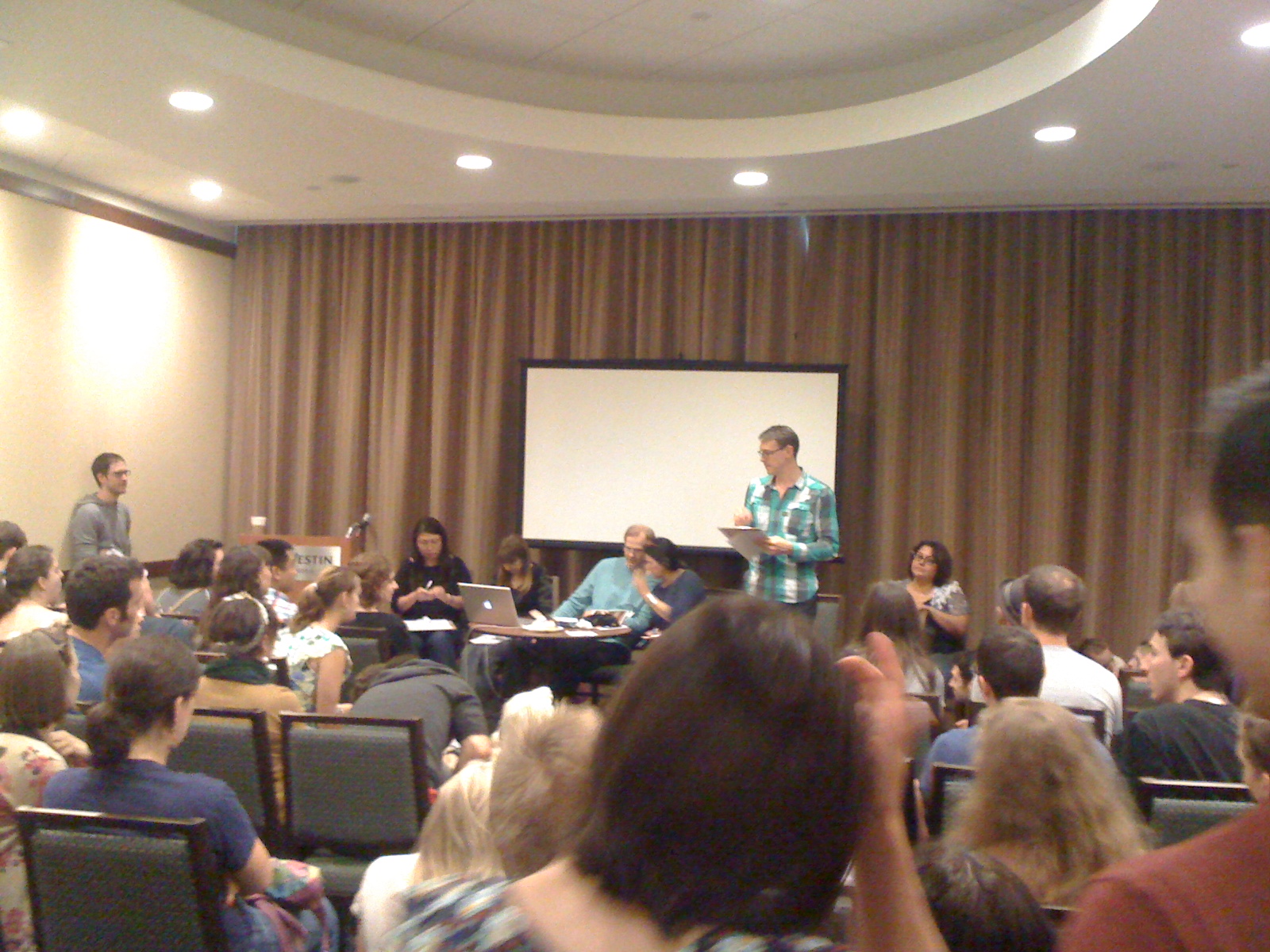
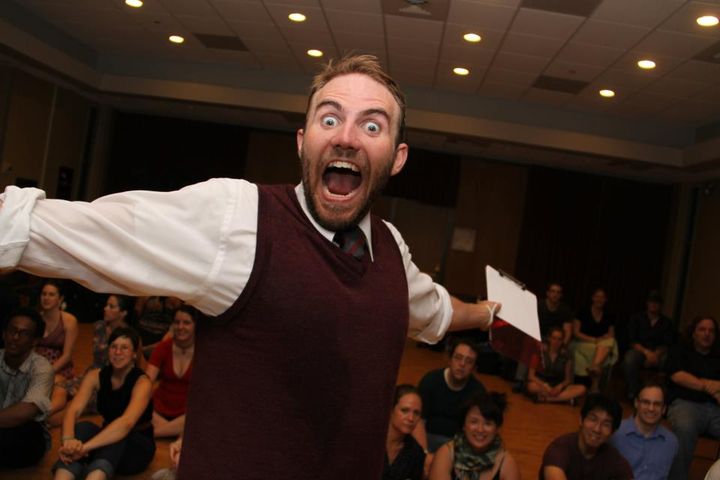
Collegiate Shag: A Few Years Back and Now

Lets start this journey by taking a trip back in time,

(1999) Camp Hollywood Collegiate Shag division:

Interesting things to note:

  • A lot of choreography, some of it original & some of it from vintage clips.
  •  Emphasis on tricks/flash to get attention (The Camp Hollywood showmanship judging criteria may explain this).
  • Bal-swing being dispersed through some couples turns out in the center (4:15 Tip West & Holly are.
  • Even though there is a line up it almost seems like a jam circle format with the competitors being surrounded, something I don’t see that much these days besides some ULHS competitions.
  • Tempos were a lot faster, my BPM counter clocked in that last song around 320ish.
  • Bonus: Notice at 5:28 a certain drummer from a LA swing band that most of the United States can recognize out there.

(2000) San Francisco Jitterbugs Collegiate Shag Routine On The USS Hornet:

What I liked is they seemed to have a little of everything in this performance. An example of this is at 0:53 they go into a “fanny out” posture popularized by Ray Hirsch in some of his clips, but the interesting thing is while they are in it they don’t go wild and crazy like a lot of people do when they adopt this posture but instead keep it clean and controlled. At 1:52 they briefly go into single rhythm shag (quick, quick, slow) for breaks as well.

(2002) Sailor Mike and Holly Dumaux Social Dance at the Argyle Hotel

In this clip we have Sailor Mike and Holly who were both in the 1999 Camp Hollywood shag division at the beginning of this post. Unlike the other two settings of a competition and a performance we get to see what Shag looked like danced socially in the early 2000s. While for most of the clip they are both pretty clean technique wise, toward the end when the drummer starts having fun, Mike and Holly start to as well. This is unlike the competition or the performance where if people were “crazy/wild” it was a reference to some vintage clip or pre-choreographed.

(2003) Instructors Demo at Boogie and Swing in Toulouse, France

Marcus Koch und Bärbl Kaufer dance in an instructor demo where there is Collegiate Shag mixed in with Balboa & Lindy Hop. What stands out to me is Marcus and Bärbl are very performance oriented and their presentation of their movement seems to be a key factor here.

(2007) Shag Jam Instructors Demo

This clip is the instructor (and special guest) demo from Shag Jam 2007 in San Francisco.  Depth is the first word that comes to mind when I see this clip, because compared to a lot of the early 2000 clips it seems like it is less of trying to get from move to move but more building upon previous movements to make more of a statement. A perfect example is at 0:36 where Sailor Mike is doing a double rhythm basic but it slowly builds up larger each time.

(2008) Camp Hollywood Collegiate Shag Division

As annoying as the guy frequently yelling “This is a battle.” is, he has a point. The battle format at Camp Hollywood showed how individuality and style was starting to become more prevalent and the pressure of a battle brought some interesting things out into the open. There are some who were staunch traditionalists and would only stay in double shag rhythm and dance crystal clean basics, there was some who would use tricks and choreography from vintage clips, and there was some that would go in their own directions.

 (2008) Shag Jam Jack & Jill Finals:

At this particular year during Shag Jam the finals were conducted by having the finalists dance with the instructors. It was a fun mix of the old school & new school, interestingly enough a lot of the old school material worked just fine with newer dancers.  If you watch the first clip at 6:47 and this one at 1:37, you will see Minn Vo show that a trick still works fine 9 years later.

(2009) Happy Feet Monday’s at Joe’s Bar and Grill Amateur Collegiate Shag Finals

This is a smaller competition in Los Angeles, California. It’s interesting to see many of the dancers who would go on to be prevalent in future Camp Hollywood Shag divisions when they were a bit more green, also its rare to see a female lead in a Shag competition as well.

(2009) Camp Hollywood Collegiate Shag Division

This year at Camp Hollywood had competition from all over ranging from Germany to New York City. At 3:14 check out both of the couples battling coincidentally both pull tricks out of the Ray Hirsch book at the same time.

(2010) Shag Showcase at Rock That Swing Festival

At Rock That Swing Jeremy Otth and Laura Keat performed in Munich. I can confidentially say this is the most polished Collegiate Shag performance I have seen in all of my scouring of clips through the internet.

(2010) Camp Hollywood Shag Division All Skate

Oddly enough the reason why this is in here is Sailor Mike’s exit. Unfortunately the entrance where he was brought on the dance floor in a coffin is not on film, but this was probably the hands down craziest competition entrance and exit of all time and earned him and Tip West the coveted Golden Bugie award that year.

(2010) Hot Rhythm Holiday Collegiate Shag Finals

Besides Tony/Jamie & Joe/Tabitha, not too much flash or tricks was thrown in this competition compared to Camp Hollywood. Interestingly enough a lot of the competitors from Camp Hollywood are not present as well.

(2011) Camp Hollywood Shag Finals

Thing to note is the change from a battle format to spotlights for each couple.  Something I would like to point out as well is I noticed a lot toward the mid to late 2000s a shift toward better technique/improved musicality/complex movement but it seemed to be missing something. What that thing was I believe is the borderline manic energy some of the competitors had on their faces and in their movements at the 1999 Camp Hollywood finals. I think what Stephen and Fancy had going for them, was the fact that they had that in this particular competition in addition to good technique.

Overall

The interesting struggle I notice now in the Collegiate Shag community is how to expand our repertoire of movements without losing the aesthetic of the dance, whether that be borrowing from Balboa/Lindy Hop or other dances. In addition the idea of sticking with double rhythm which is a very traditionalist view or expanding to “multrhythms” (Note: Formerly listed as “poly-rhythms”, see Ryan M’s comment below for clarification).

What I’ve seen in the last 10 years through my little clip scouring adventure is the assimilation and integration of vintage material and adding an individual touch to it. In the mid 2000’s I noticed people not just exactly copying Ray Hirsch’s material but slightly modifying it or creating their own entrances/exits out of it.  I’ve also seen a considerable increase among the top level dancers of their ability to remain smooth regardless of tempos are complexity of movements.

Even though I spent a decent amount of time on this, I still feel it is a rushed assessment.  Do any of you guys have thoughts on how the Shag community has evolved or is evolving?

The Puzzle Piece of Practice

In The Role of Deliberate Practice in the Acquisition of Expert Performance psychologist K. Anders Ericsson writes,

We agree that expert performance is qualitatively different from normal performance and even that expert performers have characteristics and abilities that are qualitatively different from or at least outside the range of those of normal adults. However, we deny that these differences are immutable, that is, due to innate talent. Only a few exceptions, most notably height, are genetically prescribed. Instead, we argue that the differences between expert performers and normal adults reflect a life-long period of deliberate effort to improve performance in a specific domain.

Practice Makes Perfect

Over at The Rantings of a Lindy Hopper, Alice wrote in a post labeled True Improvement about the importance of (what I inferred as) deliberate practice or practice which is dedicated and involves reflection and evaluation of the efficiency of the methods one applies. Ericsson writes about this idea  in the same publication listed above,

An expert breaks down the skills that are required to be expert and focuses on improving those skill chunks during practice or day-to-day activities, often paired with immediate coaching feedback.

As someone who has been teaching swing dance for over two years, I can confidentially claim that besides actually social dancing (which can be argued as a form of practice) my students who progress the quickest develop ways to learn on their own and evaluate their own movement, or in some cases have it previously from activities like soccer or gymnastics.

My students who are often socializing in the wall/corner of the room or constantly need supervision in a class? They usually are the ones who try to crash my upper level classes when they don’t have the fundamentals down from the previous level, due to they are in most cases blissfully unaware of it.

Aversion

However many students, especially newer ones seem averse to this idea of practice outside of dance class. As a matter of fact, one of the things I did last year was set up a practice session for my local swing dance club on a Monday for an hour for people to have floor space to work with each other on stuff.

What happened was most people either stood around expecting someone to teach them or just used the time to social dance. What boggles me is other dance communities like Argentine Tango have specific events that the purpose is solely for practice and nothing else and it works fine. Yet, it seems for the swing dance community practice time is often a personal endeavor with oneself or a partner and does not happen regularly, unless if one is on a performance troupe.

Social Dance 

To add to the conundrum I know there are people out there who strongly feel social dancing is similar to an Argentine Tango milonga that one should be 100% dedicated to ones partner and the music . In result they would be averse to how Alice approaches her improvement citing that it is something for practice time or lessons as a reason.

Personally I don’t think there is a ‘right’ answer here, due to the response depends on ones’ own personal goals and views on dance.

Conclusions

What Alice proposes as a method of improvement that I believe is sound and effective. I remember when I was trying to get swingouts as a new lead I made a rule that I had to attempt to lead x amount of swingouts every dance and it worked well in the long run.

However she even admits there is a sacrifice to be made in this endeavor,

The problem is being honest with myself and focusing on that one thing I’m working on as much as I can. It is easy to forget about it and fall back into not caring and just dancing and having fun.

What I have personally working on lately is creating more ‘flow’ in my dance a.k.a. making my dances seem less like a chain of moves/patterns and more of an interpretation of the music. But its frustrating, I feel like I am not as fun as a dancer and have nights I mentally beat myself up because I feel like I am not making progress. As a dancer I know that effective practice is a necessity for improvement, but how do I fit that in without it being potentially detrimental toward myself or my dance partners?

I think something that could help the swing dance community is creating an effective model for a practice session on a regular basis. Personally I have not seen it implemented effectively besides troupe practices or yearly events such as the Balboa Experiment.

So what i’m curious about my readers is what ideas do you have for effective regular practice or how to implement a regular practice session that suits the unique needs of the swing dance community?

Less Talk, More Rokk (Rock)

A topic I have been encountering in real life and on the internet on a fairly consistent basis is anxiety related to swing dancing, usually its one of the following:

“I am afraid to…”

  • compete because I won’t do well/people might look down on me/I won’t make finals/people will see me dancing badly/I am not a good dancer and shouldn’t even be in this division/everyone in this division is at a skill level way higher then mine
  • dance with (insert person here) because they are a really good dancer/i’m below their skill level/they are in high demand and other dancers will get upset/they are attractive.
  • dance to this song because it is too fast/its too slow.
The list could go on for quite awhile, but I think you get the point.
"But if what if I trip and fall during the spotlight in the finals?"

The Good News

If you feel you are the only one in this boat, you aren’t.  Its quite normal and many people in the swing dance community deal with these anxieties ranging from newbies taking their first swing dance lessons to seasoned competitors.  I’m not exempt from this myself even though I have been in around twenty different competitions at this point there are still some moments that I get nervous and second guess myself beforehand. I’ll even candidly admit there was a follow who I didn’t dance with for a long time, not because she was fairly skilled (which she was), but because I thought she was cute and I was afraid I would choke and mess up my leading.

Awkwardness aside,  on a positive note if you are anxious it is a good sign because it means you are considering challenging yourself to move out of your usual comfort zone. Anxiety doesn’t seem like such a bad thing if its used as an indicator that one is considering decisions that lead in a progressive direction for ones dancing.

How To Deal With It

What works for one person may be the completely wrong thing for another, so I have a list of different mental suggestions that approach the problem in unique ways.
  1. Realize the logical flaws behind the issues that are causing anxiety: Many people are afraid to dance with people they perceive as “advanced” dancers because of an apprehension that they will bore them. This conflicts directly with the fact that many of them openly say in their classes, in conversations, and online that they are more then happy to dance with anybody as long as they are enjoying the dance and not hurting anybody. Often if you can logically deconstruct why fears are on a weak logical foundation, often they become trivial.
  2. Find a counterexample to the issue causing anxiety: This is a more specific version of suggestion one, but for people who like weighing pros and cons this is useful. An example is a lot of people feel like they shouldn’t compete because they won’t do well. It can be easily argued the other way that by not competing they are preventing themselves from having an opportunity to do well in a competition.
  3. Re-framing the anxiety into a positive opportunity: I actually did this in the second point, but re-framing is a great tool to feel positive about an issue that originally may have worried you. A big game changer for myself was when David Fritos told his story about his first competition with Ryan Francois and he mentioned to see competition as not competing against people but with them. Competitions become a lot less intimidating and stressful when one views it as dancing their personal best versus trying to dance better then everyone else in the division.
However I am going to share with you an important strategy which for at least myself is the best approach:
  • Just f$#@!%$ do whatever you are anxious about: You can always go over the multiple reasons of why something won’t work or will be less then optimal. But in reality the best way to make yourself grow as a dancer is to put oneself through those awkward experiences, until it doesn’t feel so awkward.
When it comes down to it, this is dance we are talking about. You can write or talk about apprehensions when it comes to dancing or even about dancing itself all you want, but what often speaks volumes to oneself or others is what is done on the dance floor.

Mister John Clancy

At the end of August at ILHC Lennart Westerlund gave a LED Talk about the involvement of Sweden (in turn himself) of the swing dance revival back in the 80s and 90s. During the talk Lennart showed a clip of one of the first instructors they invited to Herrang, John Clancy.

The detail that caught my eye during the clip was during this video clip of him dancing he did the same Lindy Circle that I learned from Mike Faltesek awhile back, that in my eyes is rarely lead on the social floor these days. Due to time limitations Lennart only got to briefly mention John and didn’t get into much detail. My curiosity got the best of me and I shot him an email asking about John Clancy, this is the response I received.

Unfortunately I don’t have a lot of information concerning John Clancy but please find the below small infos:

At the time when we got in touch with him he lived in Hell’s Kitchen on Manhattan in New York. He was around 70-75 at the time (1982) and was married to Kicki (she also visited Herräng in 1982). He had been a dance teacher somewhere in New York in the 40s, 50s and 60s. During the World War II he spent time with the U.S. Military Air Force (did he say that he was a pilot?) and in the 60s and 70s he was a salesman of light bulbs. I guess that he had retired at the time when he was invited to Sweden. His dance style had a white and kind of ballroomish flavour. Everything he tought us was in strict patterns (short choreographys) – it wasn’t much about lead/follow. I can’t remember what kind of music he used – I even believe that most of the classes were more or less without music. Many of the things he showed had defined names. I don’t think that anything that we spent time with had a connection to how to improvise – it was very strict structures all the time. I remember that someone asked him something about the Savoy and he told that he had never been there. He also pronounced it strange – SA-VOY instead of SA-VOY. He is the only one I’ve heard pronounce it that way. Later on, when we read Jazzdance by Marshall Stearns, Stearns indicated that such pronunciation of Savoy was typical for white downtown people with not too much of an experience of the lindy hop …
Well, what do I know. However, John (and Kicki) became very appreciated during their visit to Herräng but unfortunately (I don’t remember the exact reason) we never had the opportunity to invite them to come back. I did call John a couple of times when I was visiting New York in the 80s and we met and had lunch together. Gradually we lost contact and I assume that they both have passed away by now.

Best regards
Lennart W.

Unfortunately my attempts to find more information about John and his wife Kicki online were met with no results found. However I hope you all enjoy the information Lennart was kind enough to provide.

Tumblr and Swing Dance

Tumblr

To quote wikipedia,

Tumblr is a blogging platform that allows users to post text, images, videos, links, quotes and audio to their tumblelog, a short-form blog. Users can follow other users, or choose to make their tumblelog private. The service emphasizes ease of use.

My first impression was it existed as a place to make “livejournalesque” types of posts with pictures, collect tons of pictures one likes in a single place, or like many people on facebook just spend all day liking reposting things. However the last few months I have been following the #lindyhop and #swingdance tags on Tumblr to see its relevance to the swing dancing community.

Relevance

I will say after months of sorting through posts I can tell you that most Tumblr posts are just:

  1. Their views on what they liked or didn’t like about a particular event/dance.
  2. Re-posting of a popular youtube video of swing dance.
  3. Thoughts on the journey to improving their dancing.
  4. Comments on advanced dancers/dancers that inspire them.
  5. Links to online swing dance media they enjoyed.
My issue with most Tumblr posts is they fall into the description in this quote from Wandering and Pondering’s blog post on The State of the Online Lindy Disunion,
I’ve found that very few people are interested or willing to write about larger issues in our scene with any kind of depth.  It all seems geared towards newer dancers, even blogs written by the more experienced dancers. There’s a lot of: “here’s a video I like” or “this is an event I went to.”  There isn’t that much writing about the dynamics of the scene outside of why the good dancers seem like snobs or the occasional technical dance geekery.

In spite of this, one can stumble across the occasional insightful pieces of writing like this post. In the Tumblr post, the author is critical of a competition description due to implications of a leader being described as masculine and a follower described as feminine.

The advantage a Tumblr account has over a typical blog or facebook is through the hashtags someone on day one can write something relevant to the Lindy Hop community and it can be noticed and re-posted, and eventually through word of mouth/facebook make it to the community as a whole. A post like this, which could be lost and unnoticed on a wordpress blog or a facebook note has more of a chance of hitting a wider audience. To get to the point where it wouldn’t be unnoticed on a blog one would have to build up a decent readership with influential members of the community as part of it or have an article of high caliber(or drama inciting).

However this can also backfire as well, a personal post that has descriptions of (or in some cases names) certain dancers can get spread around quickly. I’ve stumbled across posts about my friends (in multiple states) or myself that were probably unintended for our eyes. As a warning to Tumblr users if your account isn’t private, it is a good fact to remember that the swing dance community is tight knit and word travels fast.

Tumblr to those who are trying to see what is going on in the swing dance community as a whole though has some advantages. One of big reason is it allows one to clearly notice which showcases and dancers are popular. After Camp Hollywood the #swingdance hashtag was getting flooded with re-postings of Emily Wigger and Morgan Day’s Camp Hollywood 2011 Mario Showcase routine.  Likewise, after ILHC many Tumblr users were quick to re-post performances of the dancers they admired in the Pro-Lindy and Showcase divisions.

Another advantage is honest feedback for events/performances. When people are behind the veil of anonymity, they feel not so shy about saying if your event was not worth their money or if they thought a performance didn’t take any risks or was the same old vanilla material. If someone thinks your scene is full of Lindy snobs or that the DJ you had for the exchange last weekend was garbage, where is the first place you find out? Tumblr.

While it would be nice if there was more quality material on Tumblr, I understand that many of the accounts are oriented mainly for the Tumblr users themselves and their Tumblr followers. This contrasts many traditional blogs/websites which the focus is the visitors to the site. Regardless of some of the superficial material I have to wade through, it is a good way to pass the spare time and get occasional insights about the swing dance community. If you have time to kill, i’d recommend the same.

Going Down The Rabbit Hole: How I Fell Into Swing Dancing

A few weeks back I said i would write my own story of how I joined the swing dance community. I got some fun responses,  it is only fair I pay back the favor.

Curiosity

Back in high school I was curious about learning how to dance some form of partnered dancing. A girl from my French class at the time named Katherine shared my same curiosity, unfortunately the one dance studio I contacted for us to take lessons from never returned my call.  After that experience I thought my future of knowing how to dance was over and I went onto other things until a few years later when one fateful coincidence happened.

Discoveries During Debauchery 

A few years later at Janurary 2008, I had just transferred to the main campus at  The Pennsylvania State University, or more commonly known as Penn State. Joining in during the Spring semester, it felt a bit odd because everyone had their set schedules and activities/clubs to be involved with. So for the first week or two I just hung out with my roommates who were coincidentally from the same branch campus that I was from and focused on my school work. One day I was invited by a mutual friend of my roommates and I to an “International Beer Pong Tournament” on the night January 26th at a renown party apartment complex at Penn State called “The Graduate”.

Most guys stories of how they got into swing dancing usually begin with, “Well there was this cute girl..”. Mine begins with, “Well there was this keg and a beer pong tournament”.  Anyways I show up this party with a friend ready to represent team Japan in this tournament and I am expecting typical drunken shannagins for Saturday night at Penn State. The tournament went great and everybody was having fun socializing and enjoying their beverages, however then something unusual happened, for one song instead of the usual top 40s music that is constantly blasted over pop stations on the radio, jazz music was played… and people started dancing to it.

My first thought was, “Hey that’s cool people are dancing”. My second thought was, “Wait, some of these folks have had a lot to drink, how the hell are they still dancing well?”. There was two facts I was unaware of at the time:

  • First Fact: One of the roommates  (who I later found out his nickname was Orange) of my friend who invited me to this party was a member of the Penn State Swing Dance club, so that is why so many PSU Swing Dance members were in attendance.
  • Second Fact: The Penn State Swing Dance at the time was a drinking club with a swing dance problem.
Anyways, after witnessing this spectacle I asked around about what they were doing and they guided me to the club president at the time that was currently sprawled out drunk on the couch.  In spite of his condition he assured me that I didn’t need any previous experience, I didn’t need to bring a partner, lessons from the club were free and yes no matter how uncoordinated I was they would be able to help me.

Testing the Waters

After finding out their meeting times from the website I convinced my roommates Ben and his girlfriend Jessamyn to come to a lesson with me, because for some reason I felt it would go over better if I had some friends in tow. After some brief introductions my friends and I get sorted into the beginners lesson. I thought the lesson wasn’t going too horrible until half way during the lesson I realized I was rock=stepping with the wrong foot the entire time. I was slightly frustrated as well because this six count stuff they were teaching me was different then cool stuff I saw them doing at the party.

Anyways after the lesson and general announcements my two friends and I like most new dancers hugged the back wall and talked among ourselves.  After a song or two Ben and his girlfriend attempted to dance and earned some concerned looks/giggles when he dropped her on the ground during a dip. I guess the embarrassing situation was too traumatic for them because they didn’t want to come back next time. While I didn’t social dance at all that night (a trend that would continue for awhile) I showed up for the lesson next Thursday.

Even though I really didn’t feel that involved with the community at the time, I guess I stuck with it because it gave me something to do on Tuesday & Thursday nights and it was interesting to slowly learn how to partner dance. I would show up, take the lesson, then the second general announcements were over sneak out to catch the bus back home. Anyways, this all changed when one of the follows managed to stop me before I could sneak off and said that she noticed I was attending the lessons consistently but told me to stay and social dance or all the stuff I was learning wouldn’t stick. Even though social dancing was awkward and terrifying for me at first, I listened to her and slowly started staying for the social dancing portion after the lessons.

I slowly got to meet the regulars in the club at the time and got involved in all the popular post and pre-swing dance activities they liked to do, which often involved; watching movies, themed parties, and drinking. It was fun being part of a small tight knit community that shared a similar interest and I was slowly getting to the point that social dance wasn’t horribly awkward but went somewhat okay. During this time I also finally got to learn the cool stuff they were doing at the party (Lindy Hop) and a dance from my hometown area (Balboa) thanks to a PHD graduate student there named Issac.

The Penn State Swing Dance Club - 2008

Hitting the Road to Oberlin, Ohio

One of the things I always heard mentioned but never took seriously at swing dance club was the importance of travel. It seemed like something the good dancers in the club did and not necessary for me a lowly newbie. However a bunch of members from our club were going to this event named the Oberlin Jazz Dance Festival and it featured Andy Reid and Nina Gilkenson, two instructors they had a borderline obsession with. After some peer pressure I finally committed to traveling outside my little dance bubble and going to a place I never heard of 4 hours away called Oberlin, Ohio.

I later found out that there were five instructors in total, the other three were; Bobby White, Kate Hedin, and Todd Yannacone. Over Saturday and Sunday of that weekend they taught eight lessons in total ranging from Lindy Hop, Balboa, and Solo Jazz. While I found a lot of the material in the intermediate track challenging at times, I had a blast.

However whole experience was a lot to take in for my first time on the swing dance travel circuit. I danced to my first live band, The Boilermaker Jazz Band which was more up-tempo then what I was used to but a ton of fun. I came to the realization of how large the community really was with people from all over Pennsylvania, Ohio, and a few other states in attendance. I also had my first housing experience with our lovely and gracious host Brandi Ferrebee, who took great care of us and set a high standard for future hosts/hostesses to match.

Fast Forward

 My foray into Oberlin planted a seed which germinated the next few months. When I returned home in California I started dancing there and becoming into their culture which is a completely different animal from most of the East coast. The following year I became an officer of the Penn State swing dance club and started changing the format of the club using things I learned from my travels that worked for other scenes.

Its awkward reminiscing about the Penn State Swing Dance club these days, it has changed a lot since when I joined. The college now pays for us to travel to three swing dance events a year, in result more of our members are involved in the traveling circuit and the State College scene is less of a bubble.  The club has a higher level of dancing, but those who can hold their own in a drinking game has dwindled considerably.

These days I have friends ranging from California to Australia in the scene. I’ve danced all over the United States and have danced as far away as Paris, France.  I teach classes Pennsylvania and have had people refer to me as their dance instructor. If you told the high school version of myself this is what learning partner dance would lead to, I probably would have laughed you off.

While it is fun to remember my beginnings, I want to end this post because it just goes into details that are probably better found out just meeting and asking me about it. The last three years of swing dancing have been quite the journey, however I am curious to see what the future holds…

Penn State Swing Dance Club Members & Alumni at DCLX 2011

Event Review: (ILHC) International Lindy Hop Championships 2011

In spite of a hurricane and an earthquake, ILHC 2011 pressed on this past weekend in Alexandria, Virginia. With attendees from over 20+ different countries this year such as Lithuania and South Korea, ILHC lived up to its name as an international competition.

There were mind-blowing competitions, talks that had delightful stories about the history of our dance in the 80’s & 90’s, and a social dance experience that one would be hard-pressed to find anywhere else in the world besides possibly Herräng.

Instead of my traditional breaking down of events by usual categories, I am instead going to post about a few of the highlights of the weekend accompanied by photos.

Baltiquerque Party

I think Baltimore’s motto should be, “There will be mayhem!” because they always deliver. I got a text this past Saturday night from a Baltimore friend listing a room number and the time of 7:00 PM. I show up, this is what I stumble into.

Mayhem delivered.

During the party was impromptu group singing, people being crowd surfed, and fun times for all. More importantly though not just during the party but the entire weekend during the competitions Baltimore seemed to carry this high energy attitude. It was contiguous and seemed motivated people in other scenes to cheer hard for their local dancers as well.

LED (Lindy Enlightenment Dialogue) Talks

I had the opportunity to attend eight LED talks this year and thoroughly enjoyed each one of them for different reasons.

Lennart Westerlund's Talk on Lindy Hopping in the late 80's-Early 90's

The two talks that stuck out in my mind though were Steven Mitchell and Lennart Westerlaund’s talks on their experiences of discovering and learning Lindy Hop in the 80’s and 90’s. They went into detail about of their separate discoveries of Al Minns and later Frankie Manning. They both also gave insight to how the culture and education of the dance at their respective time was worlds apart from how Lindy Hop is today. I can only glaze the surface of how awesome these talks were, but I hope to have time to go into further detail about of them in a future post.

Impromptu Jams

6:00 AM after the Saturday Night Dance

Just because the DJed music stops at ILHC, doesn’t mean all the music has to stop. What I loved is seeing Saturday night an impromptu band break out. In addition the next morning two violinists and a cellist were playing some tunes and entertaining those of us not taking classes before the competitions. I’ve been noticing this trend of more dancers bringing their instruments to events, or in some cases learning how to play with others and I hope this continues.

General Highlights

If I was to write a post that covered my entire experience of this weekend, it would probably be tl;dr far too long. Instead here is a few highlights I had from ILHC 2011

  • Seeing Kevin St Laurent and Emily Jo Hoffburg make good on their promise to Baltimore at this past Lindy 500, that if they made the finals of the Champions Strictly Lindy they would crowd drive their cheering section.
  • Watching Skye Humphries and Frida Segerdahl tear it up in the Champions Strictly Lindy with solid dancing and not needing any tricks or flash.
  • Actually getting a use out of the four years of French I learned in high school. (Maidmoiselle Delfolie would be so proud of me!)
  • Showcase Division – Michael Darigol & Brittany Johnson threw down with badass swingouts and the crowd went insane.
  • Seeing friends from my home turf (Southern California) come out in a horde and throw down in the competitions. Special props to the Fly Rghts for performing not once, but twice in the team division.
  •  The junior division this year was inspiring, it gives me a lot of hope for the future of our dance.
  • Learning that the motto of Jonathan Stout and his Campus Five featuring Hilary Alexander during their LED talk is “Fuck ’em”
Your Turn
I’ve been doing the usual stalking browsing of Tumblr/Facebook and the rest of the internet for other perspectives on ILHC. But oddly its mostly just people watching videos of the event and their reactions to it. The rest of you folks that attended (I know there are at least 799 of you) either in the comment section or elsewhere, share your experiences of what ILHC was like. I’m curious.

Event Review: Lindy 500 & Baltimore Lindy Open

If you were wondering what time it was this past weekend, the wrong answer would have been Lindy Focus Boom time. That’s because in the words of Andrew Thigpen, it was actually….

"Andrew Thigpen at Lindy 500" taken by Dorry Segev

Lindy 500 BLO time!

Lindy 500 & The Baltimore Lindy Open

Charm City Swing and Towson University Ballroom Dance Club had a… well to be honest, i’m not sure what it was exactly. Normally I feel comfortable describing a weekend as a workshop weekend, competition weekend, or an exchange. In this case though, I was left at a loss.

The event had a lot of competitions, yet they were laid back and were not the dominating activity of the event. The Sunday night Soul party had a fun exchange feel, but with the Baltimore touch of people running around with sparklers in front of the venue and Nina Gilkenson coming out with a fire extinguisher thinking someone started a fire. While there were two tracks of workshops with Kevin St. Laurent, Jo Hoffberg, Nina Gilkenson, & Michael Seguin, it wasn’t the main focus of weekend for all of the attendees.

The best description I can muster is it was like an all you can dance buffet of things people like at swing dance events. However unlike many events that try this and end up spreading themselves too thin, I felt they provided the organization to make sure all facets of this event ran well.

Classes

I ended taking Kevin & Jo’s classes, however what mainly stuck out to me was the musicality class they taught with the Boilermakers & the two aerials classes they featured.

Mr. Infallible or Captain Obvious, unsure which at this moment. Photo by Dorry Segev

For the aerials class, I enjoyed that they put emphasis on safety as the main priority and would rather risk going into a overly detailed description on technique, than having people rush through things and hurt themselves. There were enough breaks with explanations to ensure people were not getting fatigued as well. One thing I liked in particular is I felt the right amount of being challenged versus being pushed outside my comfort zone.

The musicality class with the Boilermaker Jazz Band was great because (besides the joking comments about Jonathan Stout) it gave some perspective from the musicians’ side of the dance floor. At the beginning of class they played three versions of Honeysuckle Rose. First one was a 20’s version, second one was a 30’s swing era version, and the last one was a 40’s/50’s version. Afterwards they explained what they did to make each version sound from that particular era and what kind of rhythms those songs lent themselves to. One of the details I appreciated was them going into detail about tags and how those could affect a song.

Contests

The contests at BLO (Baltimore Lindy Open) consisted of an Invitational Jack & Jill, Open Jack & Jill, Strictly Lindy, and the 30-60 second Cabaret division. When they said anything goes in the Cabaret division, they meant it. A fellow by the name of Ian won in the Cabaret division with a dramatic Bob Dylan reading of a song that involved churning butter.

Invitational J&J, Photo by Dorry Segev

The results I have for the competitions are posted below, if you can fill in the blanks please email me at apache.danse@gmail.com or post in the comment section and i’ll update this.

Invitational Jack & Jill

1st Place: Kerry Genese & Elliot Susel

2nd Place: Beth Hartzel & Charlie Wieprecht

3rd Place: Ranya Ghuma & Jason Neisz

Strictly Lindy

1. Colleen Vernon & Charlie Wieprecht

2. Emily Lancaster & Jason Lancaster

3. Beth Hartzel & Albert Mak

Sunday Night Soul Party

I pity the fools who decided to bail out of the Sunday night dance, to end the event Baltimore had a soul party at the Baltimore Strut. Even a vintage music snob like myself can appreciate a night to just let loose and have fun to some soul music. There were sparklers, drenched people being cheered as they ran through a pouring storm into the dance venue, and MAYHEM the Open Jack & Jill.

All I can say is Baltimore knows how to throw a party, that’s why they have their own section in the ILHC seating plan.

Courtesy the ILHC Newsletter.

Shag Division At ILHC 2012: A Call To Action

I wanted to share with you guys a note David Lee from Washington D.C. wrote in “The Collegiate Shag Community” facebook group.

Petition for Shag Contest at ILHC: I’m sure all of us would love to see a shag contest at a high profile event such as ILHC. As it is fast approaching, now is a great time to petition for a shag contest for next year. I spoke with one of the organizers about it and running a contest presents challenges of paying for judges and prize awards. Thus, to run a successful contest, ILHC would need about 20 couples.

1) So, can you let me know in the comments whether you would be willing to come to ILHC and compete if there were a shag division? Obviously 20 couples is a lot more than there were at Camp Hollywood this year. So if you are at all inclined, please comment as it will be a gauge to let the organizers know how many people they could expect.

2) If you are interested, it would be helpful to let the organizers personally know. You can email them at ILHCinfo@ilhc.com. Please let them know both a) whether you would attend ILHC specifically if there were a shag division and b) whether you would compete.

3) Finally sponsors would help defray the cost of the contest, so please let me or them know whether you would be willing to sponsor as a scene or event organizer.

Requirements for A Competition

ILHC says they need 20 couples to run a successful competition. If you take a look at the ILHC registration page, you will see to register for any of the couple contests (Balboa/Lindy) it is a $50 dollar fee per couple. So in total they need to garner a minimum of $1000 dollars to make this contest a reality.

However it may not just be a money issue, an important part of having a contest for any event is making it exciting enough to warrant taking time away from the social dance floor. ILHC has a unique crowd of attendees in comparison to most events. In result the Shag division would have to be a fairly full in terms of registration and contain high caliber dancers for them to take the additional time and resources to make this happen.

What You Can Do To

If you have an interest in Shag there are several ways you can help out.

1.  Say You Are Willing to Compete

The first and most obvious one is say you are willing to compete. People I have talked to about dancing Shag competitively in respect to this past Camp Hollywood Shag Division frequently gave me the excuse of,  “There is no way I could even compare to the other people in the division”.

This past July I competed at the Camp Hollywood Shag division anyways. Was I ready or even close to the caliber of the other leads? Not even by a long-shot. While there were side benefits of giving me something to work towards, what mattered to me though was I  liked this dance and they needed people for the division.  Supporting the Shag community was a more important priority to me then any apprehensions I had about looking like garbage in comparison to Sailor Mike about the competition.

I think a lot of people get into the mentality of “competing against” people, which is unfortunate. One of the best pieces of advice I got in terms of competition was from an story David Frutos was telling the story about the first time he was in a competition with Ryan Francois. He said something to Ryan the effect about being apprehensive of competing against Ryan and his partner. Ryan corrected him after saying, “You are competing with us, not against us”. It is a small difference but if you come out on the competition with the latter attitude, competitions suddenly become more relaxed enjoyable experiences and seem less intimidating.

Don’t feel like you have to be the best Shag dancer ever to compete in this division. There is a year to prepare, one just has to be motivated to practice.

2. Email ILHCinfo@ilhc.com Explaining Why You Want A Shag Division

Part of making this happen is showing the organizers of ILHC there is an actual significant interest having this division exist. While any interest is good, if you email them list in particular; if you have attended in the past, if you are registered for this year, and if you have a history as a competitor at the event.

3. Spread The News of This to Other Shag Dancers

There is a bunch of us Shag dancers out there, the problem is we are all spread out. While there are a few motivated individuals out there who work hard to advocate the dance, this effort to create a Shag division will only come to fruition if we work together instead of staying fragmented. If you know any other people who are regular Shag dancers or even show a slight interest in the dance, make them aware of this.

4. Keep Dancing Shag and Work To Improve Your Own Dancing

To be candid one of the biggest frustrations I have had to deal with taking up this dance is the criticism I received towards it, sometimes even by amazing dancers who I respect.  In some cases I have even heard it referred to as a “novelty dance” or “full of patterns, mostly choreographed”.

Spending my time to argue against their established opinions is probably a waste of my time. Instead I focus more on improving my own dancing and aim to prove them wrong one day through example. In my humble opinion, how we can improve as a dance community and earn more respect is by setting a standard of excellence for ourselves and not settling for mediocrity.

About two years ago I stumbled upon Shag dancing at Camp Hollywood 2008 during their competition and was inspired to take it up after. Luckily a few months later two dancers (Amantha & Alan) were kind enough to give me a free lesson and got me started down the path of learning.

The point I want to make from that story is people get inspired to respect and take up our dance by seeing amazing dancers out there. It doesn’t matter if that forum is competitions, jam circles, or even the social floor. It is not just the reason for why one should continuously work to improve their own dancing, but why it would be a stride forward for the Shag community to be featured at ILHC. It would expose our dance at the international level to the swing dance community and give us a chance to show them what we can do.

Level Jumping in Lindy Hop: A Metacognative Deficiency Problem

“Ignorance more frequently begets confidence than does knowledge” – Charles Darwin

The definition of “levels” and how dancers place themselves in those “levels” has always been a source of debate in the Lindy Hop community. Many of us have gone to events where they have level auditions in order to make sure dancers in the advanced or masters track is are the level appropriate for the material, Mike “The Girl” Legett actually writes a nice article about this topic. For those of us who have organized workshops, figuring out how to carefully word level descriptions in hopes that people can police themselves is a struggle.

I am curious to why the fact that level jumping (attending classes for which one [clearly] does not meet the level requirements) occurs more freuqently in Lindy Hop than in other subcultures. Recently I had a group practice session myself that I explicitly stated in the event description as a requirement,

“You can comfortably lead or follow a swingout on the social dance floor. This do not mean you have taken one Lindy Hop class and have learned it. This means it is something that is almost, if not completely second nature to you.”

Yet I would say a noticeable portion of attendees who showed up were not comfortable with swingouts and in one case a person only had one lesson previously in Lindy Hop. In result I have been discussing with multiple dancers from different backgrounds (Ballet/Tap/Hip Hop), dancers of multiple skill levels in Lindy Hop ranging from newer dancers to people who have placed in national competitions, and I read the research paper on the Dunning-Kruger effect “Unskilled and Unaware of It: How Difficulties in Recognizing One’s Own Incompetence Lead to Inflated Self-Assessments”.

Edit: Here is the wikipedia summary of the paper for those who want a shorter read.

The Dunning-Kruger Effect

In 1999 Justin Kruger and David Dunning wrote a paper on the paradoxical idea that those most incompetent in a domain usually have the inability to distinguish incompetence (whether it is themselves or others) from competence. They also noted ironically the way for them to gain that ability is by becoming more competent.

To quote wikipedia, Kruger and Dunning proposed that, for a given skill, incompetent people will:

  1. Tend to overestimate their own level of skill;
  2. Fail to recognize genuine skill in others;
  3. Fail to recognize the extremity of their inadequacy;
  4. Recognize and acknowledge their own previous lack of skill, if they can be trained to substantially improve.
Sample test group from the Dunning-Kruger paper.

This explains why Intermediate classes are often crashed by people not prepared them. The class descriptions fall on deaf ears because people lack the experience/context to properly evaluate themselves. However this does not explain why this happens so frequently in swing dancing compared to other skill related domains. From my personal research I have come to the conclusion of two main points of why it is more of an issue for our community.

1. Because Swing Dancing is a “Street Dance” and is not standardized it creates a lack of context for newer dancers to develop the metacognative skills to properly assess their own skill level in dance.

When one participates in most martial arts communities it is a well established fact that you have to go through all the material in the belts before black belt material. When one wants to become an engineer there is an established curriculum of the required class material.

To add to the confusion the definition of levels is subjective depending upon the location of an event in the world and the target group of dancers they are trying to attract. David Lee from DC wisely noted in a previous post of mine about definitions of the “Intermediate” level in Lindy Hop,

You know all of those definitions above have liberal and conservative interpretations. An intermediate at Camp Jitterbug isn’t the same as an intermediate in our local DC classes. The bell curve changes depending on where you go.

I’m guilty of making the mistake of misjudging myself ready for a lesson in the past due to this bell curve. When I first started dancing after taking “Intermediate” classes in Pennsylvania for a few months I flew back home in California and took an “Intermediate” class out there for the first time. Much to my surprise the class was way above my head and I had my ass handed to me in the lesson.

Many of the individuals who I talked to that were from different dance communities commented on the fact that there was an established system of progression, in some cases there was even a requirement of time invested in certain levels.

2. Swing Dancing is often promoted or marketed as a hobbyist activity for everybody, in result people may get disillusioned that it requires less of a time/effort investment than skills that are promoted under the banner of an artistic field or a sport.

One of the things I love about the swing dance community is it puts a serious effort to be an inclusive community. Often swing dancing is promoted as an activity for everybody, no partner or previous experience required! This is in contrast to ballet that promotes itself as a serious art form that demands an investment of time and passion to even become considered competent at it or martial arts where in countless films it is portrayed as skill that requires hard-work and dedication at all times.

However anyone who is an experienced Lindy Hopper will tell you, getting a decent swingout and maintaining it is hard work that can take years. Attempting to get a good swingout is a challenging endeavor that can take a lifetime. But the way Lindy Hop is marketed by most promoters to the public, you would never guess this is the case.  To play the devils advocate, my personal theory is because of this inclusive atmosphere it allows some dancers to get disillusioned of the actual difficulty to become a skilled Lindy Hopper and what a skilled Lindy Hopper is.

Conclusion
While level jumping has been and always will be a problem for the swing dancing community, I believe it is a trade-off we get for freedom of expression and having an inclusive community. If people on a fairly often basis put themselves in the wrong levels, I consider that more than fair trade for the advantages we gain as a dance community.

Events in the swing dance community have different ways of approaching this problem. Some of them put highly detailed level descriptions that even list what moves one should be able to perform and BPMs one should be able to dance at. Others have auditions for the higher skill tracks before classes start. Personally what I haven’t seen but I could be interesting is having videos posted showing the level of competency they are looking for in each track. Dancing is a difficult subject to debate about or explain with words, perhaps a visual aid could greatly assist an event attendees judgement.