Wait, It Is Not Done?

The title of this post is the one statement you do not want to be making as an organizer for an event. One of the pitfalls I have seen at workshops/events or at the first few weeks at newer venues is when responsibilities are ambiguously or poorly delegated.
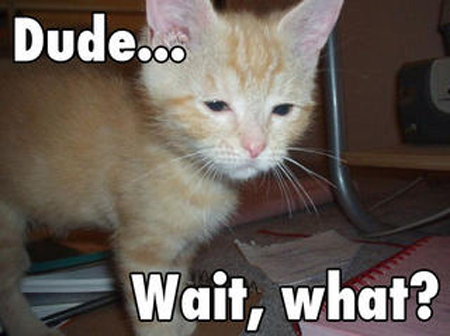
Wait, what?
The expression you do not want to have at your event.

A personal anecdote of mine is, when I was one of the organizers for a workshop at my college. We delegated a volunteer to be the “Volunteer Coordinator”. However until the end of the Friday night welcome dance, we did not know that we did not have any volunteers to take down the equipment. It was a faux pas on us, the organizers behalf because we clearly did not outline what the responsibilities of the “Volunteer Coordinator” were. Luckily one of the organizers and her friends she was hosting was willing to do take down, but it was one additional responsibility for someone who was already in charge of running things that weekend. Below I will list some tips I have, to ensure something like this is less likely to happen for yourself.

Guide to Properly Delegating Responsibilities

  • 1. In writing, clearly outline responsibilities: When writing this, you want to make it reasonably detailed as possible and leave no room for ambiguity. Also ensure that this person and yourself both have a copy of this. That way they do not need to bother you if they forget what to do and you know who is in charge of what tasks. I know some people prefer to do this vocally, however putting it down on paper prevents potential arguments afterwards (especially if someone is volunteering for a comp) and unnecessary distractions to both the organizers and volunteers/workers. [1]
  • 2. The day before the event remind those who have the potential to forget responsibilities: As an organizer this has the benefit of giving yourself a peace of mind that you have double checked every person helping to run the event knows what they are responsible for and act as a reminder for those who may have lost track of what they are in charge of. This is especially in the case of volunteers who often are dealing with travel, finding their host for housing, and other issues besides knowing where they are supposed to stand, and what type of wristbands to check for.

If you have any tips or ideas as an organizer or an attendee of events, please comment below!

Footnotes:

[1]: As an organizer, when you have four different things running in your head while you are trying to set up for a dance or classes that morning for a workshop, last thing you do is have a person come up and derail your train of thought with a question of something they should already know about.

The title of this post is the one statement you do not want to be making as an organizer for an event. One of the biggest pitfalls I have seen at workshops/events or at the first few weeks at newer venues is when responsibilities are ambigously delegated.

Wait, what?
The expression you do not want to have at your event.

A personal

Back to Square One

Backstory

So this past Wednesday I put myself back in the seat of the “first time student” by taking a hip-hop class, a dance style I have never tried before.

After waiting for my friends, Verionica who usually does this and Logan who was taking his first dance lesson ever outside of the studio, we walked in. It was slightly intimidating walking into a studio that focused more traditional forms of dance. Windows displayed ballet and modern dancers younger then myself, who had a quality of movement I could only hope to achieve. After paying for the class, my friends and I walked in the room and found an assortment of people taking this Hip Hop class.

Shortly after, the instructor as the sheet described him, “The ‘Legendary’ Cu” walked in and gave a short description of the class. Unknowingly my friend and I came in on the second week of a two week series. In result, the warmup was skipped so we could play catch-up. During the class we learned choreography to the song “Love, Sex and Magic” by Ciara featuring Justin Timberlake which went at a pace that was great for me. Cu was a great teacher and I will probably use a future post to go over his teaching methods, which made the class a great learning environment for Logan and myself who were taking Hip-Hop for the first time. Cu also commented to both of us at the end of the class that we both did a good job. Unkwoingly to us, it was not a complete beginner hip hop class but more a beginner/intermediate level. Afterwards Logan was asking Veronica and myself if either of us were watching to see how he did. We both agreed we were trying to focus more on ourselves, then anyone else in the class.

First Time Students’ Experiences

So for organizers who run a scene and trying to attract new dancers or teachers who are teaching absolute beginner lessons, these are the two things I gleaned from going through the first lesson experience again.

  • New students feel much more comfortable going to classes with familiar people such as friends, or even being an acquaintance with someone in the class.
  • Many people come into classes with fears that the material will be difficult for them to learn and can often get self-conscious about how they are doing (especially with partner dancing). A friendly, encouraging teacher goes a long way to create a shift in mentality for students and relax them.

For organizers this means for your beginners classes, first make sure to have a teacher who is friendly and encouraging. Often this first class is the difference between having a new dancer or possibly having someone spread a bad reputation about your dance venue. Also try to create a way that it benefits people attend your classes in a group, or create an insentive for current members/dancers at your venues to bring in friends with them.

For teachers this means when working with beginners make sure to be positive, encouraging, and friendly. Most people are taking their first dance class to have fun and as a social outlet, it is important to keep this in mind.

It Don’t Mean a Thing If It Ain’t Got That Swing

I don’t dig that two-beat jive the New Orleans cats play. My boys and I have to have four heavy beats to the bar and no cheating.
— Count Basie

Recently I have been visiting a lot of venues. These are small scenes that are often somewhat isolated. I have been thinking about the music choices played there by the DJs, which frankly baffle me at times. This post which I read recently over at the blog, The Casual Discourse of a Socially Awkward Lindy Hopper, the author writes about her experience saying some of the things I have been tempted to say in public, but refrained from due to apprehension of the exact situation she experienced.

For those of you who want the quick summary, the author visited a venue she used to regularly attend. In this visit she experienced mostly songs that were simply undanceable. The songs that were danceable consisted of the cliché neo-swing (Big Bad Voodoo Daddy) material that makes most experienced Lindy Hoppers cringe. In result people (including herself) were complaining to other regular swing dancers at the venue about the music. The DJ maturely responded to this by leaving a nasty comment on her facebook wall referring to her friends and herself as “snobs” and defriending her on Facebook.

Honestly, I wish there was a more tactful way of going about this then complaining to the venue organizer/DJ or trying to politely suggest to the venue organizer/DJ something. (Better then handing the DJ what is pictured in Figure 1.0 below) But as I am keenly aware of being a DJ myself, it is often a very personal endeavor and unfortunately we can be quick to take offense to people who criticize our abilities.

[Figure 1.0]: DJing for Dummies

I am not going to write a guide about how to be a better swing dance DJ, that is covered in multiple places over the internet. Just a message for be organizers and people who are concerned for their local venues or scene in general.

What music is DJed greatly affects not just how your dancers at your venue dance, but the reputation your venue has.

Frankly, one could be surprised how fast things via word of mouth can travel in the Lindy Hop community. I know several venues, in different states, that intermediate and above dancers avoid because of their reputation for bad music. There tends to also be a correlation with bad dancing and bad music as well. How can you expect your new dancers to be able to dance on beat if they rarely hear swing dance music with a decent rhythm section or be musical when they can’t make out clear phrasing? It confuses me how some places will go to great lengths to create an inviting and fun atmosphere then overlook this one big aspect of running a venue.

Carl Nelson, a jack of all Lindy related trades (teacher/competitor/performer/organizer) wrote this in his blog which provides some insight,

As a traveling dancer I’ve seen far too many communities on the decline or, worse yet, falling apart altogether.  Why is that?

As dancers we’re all too often misled into believing that a passion for dance is enough, that effective business strategies don’t apply to performance art.  Yet what happens when your classes are empty, your teachers are disheartened by the lack of interest (and a paycheck), and your events are poorly attended.- – Carl Nelson

Carl makes the very valid point that running an effective scene is just like a business. DJing, like teaching is something that should be done by someone who takes the position seriously and is qualified. I have seen many venues let people who shouldn’t touch a DJ booth, do so because they do not want to hurt that person’s feelings or create drama. Organizers, avoid that common trap and have people who know what they are doing as DJs. In result you will foster an environment for dancers to improve and a positive reputation for your venue.