Warm-Up Songs: A Worthy Investment for Competition

Let me start off this post with a personal story. In my first Jack & Jill competition that I made finals I was paired with a follow named Josephine who I had never danced with before in my entire life.  The format of the finals was which in phrase battle style which meant for two sets of eight counts of 8 we would have to dance alone in front of a crowd with no idea of how the other person would react. To add onto that a fair amount of the people I was competing with were paired with people they regularly danced with at regional dance events. To say that I was in a slightly intimidating and nerve-wracking situation would be an understatement.

An interesting trend that my friend Annabel Truesdell noticed and I agree exists as well, is competitions in the United States are cutting out warm-up songs before competitions. The main reason I am assuming for this is since more events are creating more divisions, time becomes a pressing issue and those warm-up songs add up.

Opinions

I figured to get a good representation of how competitors in the community feels about the topic, I’ve asked several individuals who regularly compete across the United States for their opinion on the issue with the following question,

What’s your opinion about warm-up songs before competitions? I’ve noticed this trend of some events are cutting them out to save time, but have noticed some competitors complaining about it in result.

These are the responses I received:

Alice Pye who writes for the blog The Rantings of A Lindy Hopper and regular competitor at Lindy Hop events around the United States such as ILHC & Camp Hollywood.

 “I need them definitely. Especially for jack and jills, obviously and also form the promoter/organizer point of view if you take that minute to give everyone a warm up song in the beginning, you’re pretty much guaranteeing a great show for the rest of the competition. I think cutting that warm up cuts a lot more than that one minute, it cuts the fun out of the rest of the comp.” – Alice Pye

David Lee who regularly competes at Balboa, Collegiate Shag, and Lindy Hop events across the United States at events like ILHC, All Balboa Weekend, and Hot Rhythm Holiday.

“Yes, it helps to have a warm-up song. It is a lower pressure environment to get to know your partner’s connection and the warm-up song is usually a little slower.

For example at ILHC this year, we went straight to spotlights. I danced the lindy J&J with a partner I have never danced with before in front of the whole community of lindyhoppers. A warm-up song would have helped me smooth out some of the edges. Generally if you go straight to spotlights, it is going to be fast and faster for the final all-skate.

I think a contest should test all tempos of your abilities. For example, the first year of ILHC used a slow and fast spotlight. Westies test the range of a dancer’s abilities by using a classic and contemporary song. It would be nice to see more contests that show the entire range of tempos that lindyhop is danced to rather than fast and faster.

The tempos of contests is a separate issue, but the warm-up song has been filling the role of the slow song in previous contests. If the trend is to eliminate the warm-up song, then we need another way to show off lindyhop to slower tempos.” – David Lee

Laura Glaess an international instructor who regularly teaches, competes, and judges at competitions from ULHS to the Lonestar Championships.

“Hmm… I feel like I can kind of see both sides. As a competitor, you really want that warmup song. If it’s a Jack and Jill, you need to get an idea of what the other person is like. If it’s a strictly, you want to use it calm down. However, as an organizer, you’re considering all of the people who are sitting there, not dancing. If you’ve got a load of comps, all of those warmups can add up.

I think if the event doesn’t have that many comps, give everyone a warmup song. It’s only a minute. If the event is really stuffed, I think the Jack and Jills should still get one. It’s an investment in the show they’ll be putting on.” – Laura Glaess

Morgan Day a.k.a. Super Mario who  regularly competes in Lindy Hop, Balboa and Collegiate Shag competitions on the West Coast.

“As a competitor I’m for them. Personally, I think 90 seconds isn’t a significant time in the competition when you have a phrase battle that goes on for 6 minutes. Some event organizers might want to cut them so they can jump right into the “show” part of the competition, but a dance competition isn’t a pre-planned show (like what they do at Camp Jitterbug). A warm up songs lets dancers (especially amateur dancers) get into competition mode smoothly. That’s my $0.02.” – Morgan Day

Mary Freitag who writes for the blog Art and Dancing and who regularly competes and teaches at Lindy Hop and Balboa events across the United States.

“I like warm up songs for jack and jills, and I think that they aren’t really necessary for strictlys. Whenever I have done finals of a jack and jill and they don’t have a warm-up, I can never really get in the groove with my partner….even if I have danced with them a bunch before. Warm-ups really do help for jack and jills, even if it is just 1 minute! However, with strictlys you already know your partner and usually are dancing together for the songs right before the strictly anyways, so don’t really think they are needed.” – Mary Freitag

The Cost of Cutting out a Warm-Up Song

I agree from personal experience with the sentiment that most of the dancers who gave me responses wrote which is for Jack & Jill’s (especially in the case of newer dancers) that the warm-up song is an investment that organizers should put in to create a better quality experience for the audience that the competitors are trying to entertain and for the competitors who may be dancing with somebody for the first time in their lives.

Each choice has repercussions, the deciding factor is if the benefits outweigh the costs.

The opportunity cost for cutting out this warm-up means likely some of the competitors will have a case of the jitters and may not dance to their full potential that they would with one. As many of the dancers who responded agreed, that one minute is not a significant cost for the benefit of increased entertainment value for the crowd and a more likely positive experience for the competitors.

However in terms of a Stricly competition I would say like Laura wrote that it is a nice benefit to allow competitors to calm down with their partner. However like Mary wrote most people who compete in Strictly competitions already know their partner and usually dance with them right before the competition anyways. If there are not that many competitions that weekend and time allows for it, I can only see benefits from allowing for warm-up songs, but it is completely understandable if they are cut from the schedule due to time constraints during busy events like ILHC.

Alternative to Traditional Warm-Up

David Lee in my brief chat with him made a suggestion which I think has a lot of merit and has a similar format to what many people who enter Strictly competitions already do,

“One other option for warmups is to gather the competitors beforehand, match, and then give them one song of social dance time before the competition.” – David Lee 

What this does is not cut into social dance time, yet provides competitors a chance to know briefly the individuals they are dancing with. There is a third benefit that I realized the more I thought about this, which is this type of warm-up is also not in front of a crowd making it a much more low pressure environment then a traditional warm-up.

Warm-ups Worthy Investments

When it comes down to it at least for Jack & Jills’ if organizers are forced to cut out warm-up songs I think it would be more efficient to better organize the weekend then cut them because even if in the worst case scenario that there are 5 J&J divisions and each warm-up takes an unrealistic 3 minutes. That is still only 15 minutes out of an entire weekend to provide your attendees with a better quality experience. If that still seems like too much of an investment on part of organizers, implement David’s idea to still provide competitors with that sense of comfort and not cut into your event’s schedule.

I think a quote from my conversation with Alice best sums up my sentiment on the matter,

“You really have to choose the right corners to cut ’cause sometimes you think you’re cutting something out, but it’s actually holding a lot of other things in place…” – Alice Pye

C’est Quoi Cat’s Corner?

This past Friday night/Vendredi soir I had the privilege of visiting Cat’s Corner located in Montreal, Canada. For those of you unfamiliar with Cat’s I am reluctant to say it is just a swing dance venue because it had a community atmosphere when I visited.

Community

Options for everyday of the week.

One thing that Cat’s especially does to help out with the community feel is that it caters to the unique co-exisiting Anglophone and Francophone cultures within the city.

Within my visit to Cat’s I noticed the instructors for the classes would ask at the beginning their learning language preferences and would teach in either English, French or both depending upon the results. For those aspiring to learn French or students more comfortable learning in their native tongue, the lessons at Cat’s create a welcoming atmosphere.

Events within driving distance & Swing Cats!

Another thing Cat’s does to foster this sense of community is networking with not just other swing dance venues in the city but with surrounding communities as far as Rochester. When I was hanging out the following Saturday with some Cat’s organizers in the studio office, they were actively looking for events in the surrounding area to promote while munching on some Fairmount bagels.

This contrasts some of the horror stories I have heard in the U.S. of venues almost bitterly competing against each other.  Which ultimately in the end just hurts the local dance community because of the pyrrhic victories.

Options

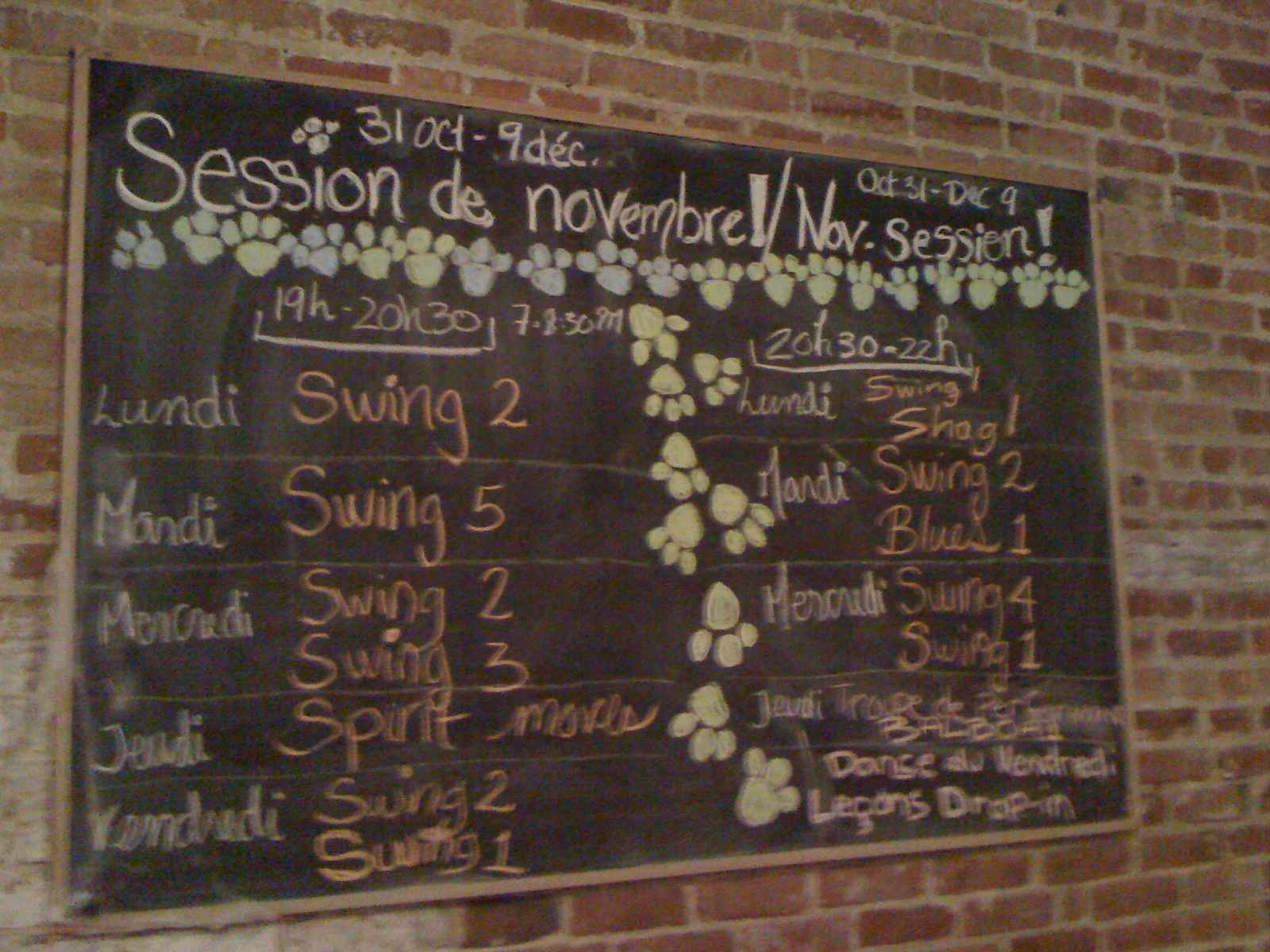
As in most places they featured in their spacious and beautiful main studio, not one but two DJs that went until around 2 AM. However in the other studio they had a blues room open as well around 11 PM. As shown in the first picture they offer not just multiple levels of Lindy Hop, but classes in Collegiate Shag and Blues as well. Not listed in that picture, but I am fairly sure they have instruction in Balboa as well. The best thing is the classes are free with dance admission. What this does is encourages new dancers to find their own personal niche in the Cat’s community by taking classes tailored to their pace and preferences.

What is Cat’s Corner?

This is my view as a visiting American, so take what I say with a grain of salt. Talking with local organizers and dancing at the places I get the sense that Cat’s Corner is not just a dance venue but a place to be involved or be a part of. The staff (offical and volunteer) seems endeared toward the idea of maintaining and improving Cat’s and the classes are situated to cater toward the preferences of the dancers.

Nearby awesome food is an acceptable answer.

I know it sounds slightly cheesy, but I think it is what great events in the swing dance community do. People go to ILHC or Herrang because they want to be part of that experience, there is a distinct attitude and personality that is associated with those events that attracts people.

So if you are in Montreal on a Friday, pay a visit to their fun community. If possible grab a Schwartz sandwich beforehand and some poutine after.


Bridging the Gap: Jazz Music & Dance

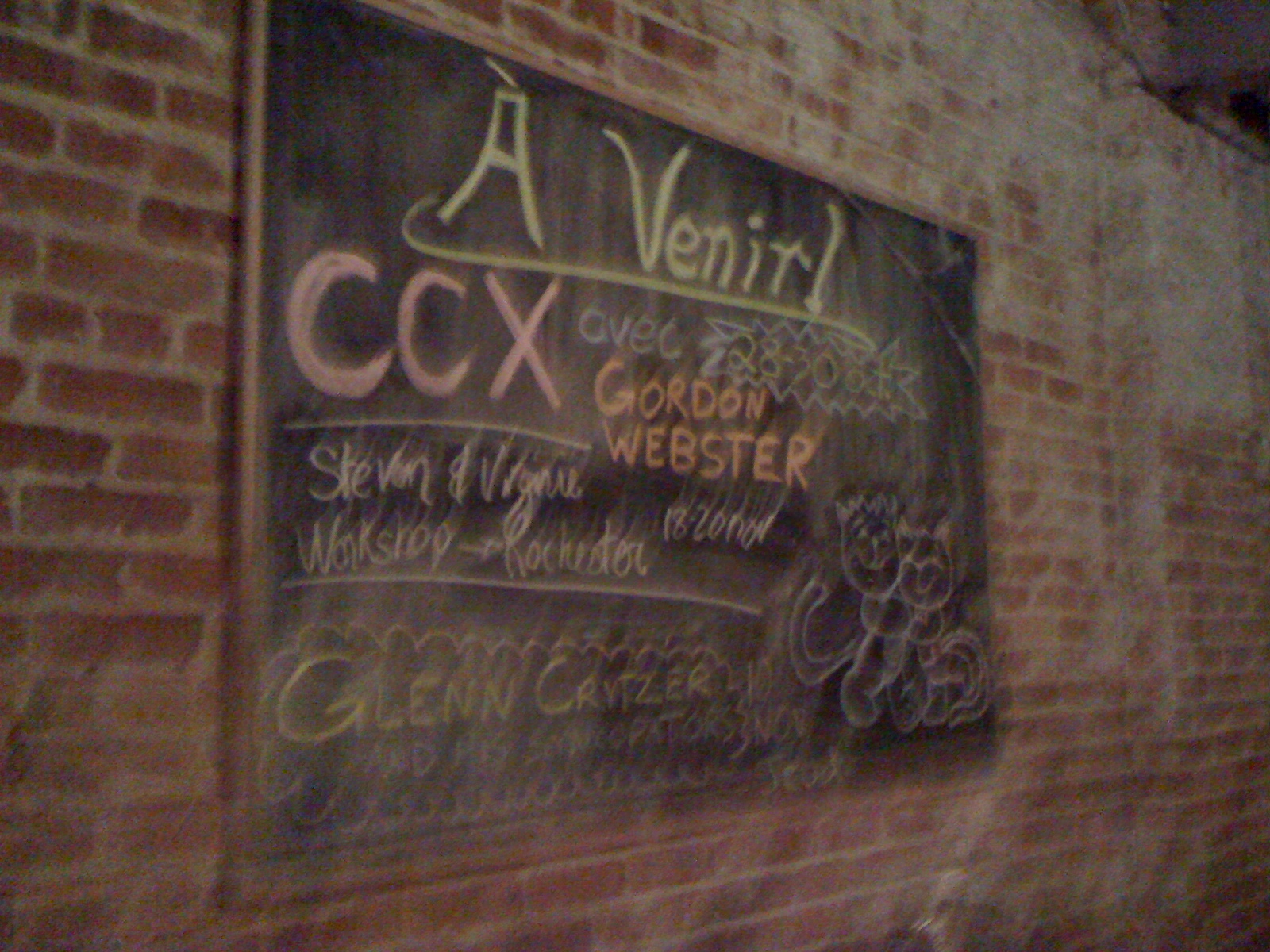
This past weekend during Steven and Virginie, a workshop weekend in Rochester I had the privilege being in attendance at the live recording of a new CD “Live in Rochester” by The Gordon Webster Swingtet  featuring vocalist Naomi Uyama. While the experience was amazing and Naomi’s vocals on “Do You Know What It Means to Miss New Orleans?” sent a wave of nostalgia through me, in hindsight it put an interesting thought in my head.

Many people in the swing dance community know Naomi as a one of the dancers in the international instructors circuit, but my first experience with her was as a featured vocalist with The Boilermaker Jazz Band.  To me for several months she was “Naomi, the vocalist” not “Naomi, the International Lindy Hop Instructor”.

Mike Faltesek is another example of someone who fulfills these double roles. Around the world from Seoul, Korea to Philadelphia, United States dancers know him as a widely recognized swing dance instructor. Yet he also has an identity as a musician for the Careless Lovers having played recently at such events like Camp Hollywood or the Albuquerque Lindy Exchange.

Steven Mitchell is a shining example in this category for having been this duel role for quite some time. He regularly travels around the world as a swing dance instructor with his dance partner Virginie. However he also known to sing with Gordon Webster and occasionally other bands.

And You Crossover

It’s no secret that some jazz musicians ranging from back in the early 1900’s like Artie Shaw to today are skeptical of dancers,  thinking we would dance to anything if it had a beat. But a trend I have noticed is the swing dance community putting an honest effort understand the viewpoint of the musicians who perform for our community and to show that we appreciate what they bring to our community.

Perhaps this effort has always existed and I have been largely ignorant to it, but lately it has seemed to come not just from prominent members of our community leading by example (such as dancers listed above), but from scene organizers and average dancers as well. An example of this is found here in a post by Hamphats.ca of how the Montreal swing dance scene went up in arms on Facebook when a promoter was late in the payment of Meshiya Lake and Her Little Big Horns.

The Welbourne Jazz Camp is another example of this integration, creating an environment where one can pursue an education as a dancer, musician or both if you wish.  To quote their webpage,

“The creators of Wellbourne Jazz Camp  (Amy Johnson, dance director, Ben Polcer, music director)  have a vision of further bridging the gap between the inseparable jazz music and jazz dances.”

I think a lot of dancers wonder how can we improve and grow the scene? I think this idea of bridging the gap is a step in a very positive direction.

I’m not saying you have to go out and pick up a musical instrument and join a jazz band. (Though it is totally cool if you do.) But even little things help such buying a band’s CD instead of burning it from a friend or even something as simple as going up and introducing yourself to band members and thanking them if you enjoyed their performance.  Most of them are more then happy to talk to you and you can get some amazing stories in the process.

Teaching Tool: Giving Students A Vocabulary

Often when I am teaching  swing dance classes I want to assess how my students are doing or give them tools to assess each other/ themselves. One thing I learned quickly is if I asked the class, “Does anybody have any questions?” I would be met with blank/confused stares and occasionally a brave soul.

Average Student: What is this? I don't even

Vocabulary

Often for students something will feel wrong but they sometimes just lack terms to articulate what exactly is ailing them. When a follow tells a lead that a move is being lead wrong, it is useful. However it is far less effective then an answer such as  “You are tensing your left arm so I can’t feel connection.”

What I try to do when asking students a question in a class setting are questions that target specifics. For example if I am teaching a rock step, “Follows did you feel a stretch from a rock step that propelled you forward?” or “Leads were your follows waiting for you to release tension on the rockstep, or were they backleading?”.

This works as well if you are trying to get students to give each other feedback, which I often do in my intermediate and above classes. An example of this is “Okay after you try the move three times to the music, stop and talk to your partner about what made it work or didn’t work. Some potential things to talk about are connection, tension, not looking at the ground, and if it was smooth or choppy.” When I phrase feedback that way, they have four different categories to flesh out their conversations with and this usually results in actual conversations giving vital feedback, versus the chit chat or blank stares I see during some classes during feedback time.

What I plan to try one of these days, is the classroom I teach in has a blackboard. I want to put the words up in chalk and see if visual stimulus would help my students out. Try this out, tell me how it goes!

A Game To Develop Assessment Skills

A critical component for someone if they ever want to judge a swing dance contest or to become a good dancer themselves is the idea of defining ,then being able to assess what is “good dancing”.

Dax Hock explains in this interview,

I think people spend far too little time thinking about dancing. For example, what dancing actually is, what makes good dancing, and what differentiates it from “not as good” dancing? Why other people might be improving faster or having more fun? I guess the point I like to make to those interested in improvement is this….if you don’t really understand what something is you’re not going to be able to get much better at it. This goes for the dance as a whole or a concept as small as rhythm, leading, or a swing out.

However the struggle many people have is how to develop this besides the first obvious solution, which is to dance a lot to gain an experienced background to draw from?

One solution is take a look at events that are centered around the idea of determining good dancing, also known as competitions. Especially at the national/international level it is not unreasonable to expect that most of the judges have reasonable experience in this skill set of determining good dancing. Based on this I created a small game to improve that skill for myself and I am curious to see if it helps you guys out.

Assessment Game:

1. Pick a competition which has a video of good quality (shows all the dancers ) & has results posted online somewhere that you are unaware of.

2. In the time of the video act like a normal judge, if the competition uses relative placement then use it. Preferably only watch the video of the competition once so you get as much time as the judges and during it write notes and then choose your scores.

3. At the end compare your scores with the overall placement and each individual judges placement and ask yourself why your score was the same or different from the judges. (Watching the video again greatly assists with it.)

Notes:

This has been useful for me because I think it has improved by ability to assess quality of movement with dancers. This assists greatly in situations where I am teaching and I need to trouble shoot my students problems or when I am watching video of myself and trying to figure out what I am doing wrong. Most importantly though it has allowed me to to notice subjective biases within my own judging and other judges.

Take a look at the ILHC 2011 scoresheet for the Strictly Lindy Champions Division, along the top of the pack scores are all over the place among the judges. If you watch the video from that event and compare the judges scores, you will notice some judges had preferences toward certain things such as flashy tricks/aerials or classic choreography.

Which leads me to my next point, which I think ultimately is the more important thing learned is what is “good dancing” to oneself as an individual. While it is nice to get explanations from dancers somebody admires whether that be an old timer like Hal Talkier or a modern dancer like Skye Humphries, I believe it is pivotal to a dancers growth at the latter stages to answer this question for themselves.

Collegiate Shag: A Few Years Back and Now

Lets start this journey by taking a trip back in time,

(1999) Camp Hollywood Collegiate Shag division:

Interesting things to note:

  • A lot of choreography, some of it original & some of it from vintage clips.
  •  Emphasis on tricks/flash to get attention (The Camp Hollywood showmanship judging criteria may explain this).
  • Bal-swing being dispersed through some couples turns out in the center (4:15 Tip West & Holly are.
  • Even though there is a line up it almost seems like a jam circle format with the competitors being surrounded, something I don’t see that much these days besides some ULHS competitions.
  • Tempos were a lot faster, my BPM counter clocked in that last song around 320ish.
  • Bonus: Notice at 5:28 a certain drummer from a LA swing band that most of the United States can recognize out there.

(2000) San Francisco Jitterbugs Collegiate Shag Routine On The USS Hornet:

What I liked is they seemed to have a little of everything in this performance. An example of this is at 0:53 they go into a “fanny out” posture popularized by Ray Hirsch in some of his clips, but the interesting thing is while they are in it they don’t go wild and crazy like a lot of people do when they adopt this posture but instead keep it clean and controlled. At 1:52 they briefly go into single rhythm shag (quick, quick, slow) for breaks as well.

(2002) Sailor Mike and Holly Dumaux Social Dance at the Argyle Hotel

In this clip we have Sailor Mike and Holly who were both in the 1999 Camp Hollywood shag division at the beginning of this post. Unlike the other two settings of a competition and a performance we get to see what Shag looked like danced socially in the early 2000s. While for most of the clip they are both pretty clean technique wise, toward the end when the drummer starts having fun, Mike and Holly start to as well. This is unlike the competition or the performance where if people were “crazy/wild” it was a reference to some vintage clip or pre-choreographed.

(2003) Instructors Demo at Boogie and Swing in Toulouse, France

Marcus Koch und Bärbl Kaufer dance in an instructor demo where there is Collegiate Shag mixed in with Balboa & Lindy Hop. What stands out to me is Marcus and Bärbl are very performance oriented and their presentation of their movement seems to be a key factor here.

(2007) Shag Jam Instructors Demo

This clip is the instructor (and special guest) demo from Shag Jam 2007 in San Francisco.  Depth is the first word that comes to mind when I see this clip, because compared to a lot of the early 2000 clips it seems like it is less of trying to get from move to move but more building upon previous movements to make more of a statement. A perfect example is at 0:36 where Sailor Mike is doing a double rhythm basic but it slowly builds up larger each time.

(2008) Camp Hollywood Collegiate Shag Division

As annoying as the guy frequently yelling “This is a battle.” is, he has a point. The battle format at Camp Hollywood showed how individuality and style was starting to become more prevalent and the pressure of a battle brought some interesting things out into the open. There are some who were staunch traditionalists and would only stay in double shag rhythm and dance crystal clean basics, there was some who would use tricks and choreography from vintage clips, and there was some that would go in their own directions.

 (2008) Shag Jam Jack & Jill Finals:

At this particular year during Shag Jam the finals were conducted by having the finalists dance with the instructors. It was a fun mix of the old school & new school, interestingly enough a lot of the old school material worked just fine with newer dancers.  If you watch the first clip at 6:47 and this one at 1:37, you will see Minn Vo show that a trick still works fine 9 years later.

(2009) Happy Feet Monday’s at Joe’s Bar and Grill Amateur Collegiate Shag Finals

This is a smaller competition in Los Angeles, California. It’s interesting to see many of the dancers who would go on to be prevalent in future Camp Hollywood Shag divisions when they were a bit more green, also its rare to see a female lead in a Shag competition as well.

(2009) Camp Hollywood Collegiate Shag Division

This year at Camp Hollywood had competition from all over ranging from Germany to New York City. At 3:14 check out both of the couples battling coincidentally both pull tricks out of the Ray Hirsch book at the same time.

(2010) Shag Showcase at Rock That Swing Festival

At Rock That Swing Jeremy Otth and Laura Keat performed in Munich. I can confidentially say this is the most polished Collegiate Shag performance I have seen in all of my scouring of clips through the internet.

(2010) Camp Hollywood Shag Division All Skate

Oddly enough the reason why this is in here is Sailor Mike’s exit. Unfortunately the entrance where he was brought on the dance floor in a coffin is not on film, but this was probably the hands down craziest competition entrance and exit of all time and earned him and Tip West the coveted Golden Bugie award that year.

(2010) Hot Rhythm Holiday Collegiate Shag Finals

Besides Tony/Jamie & Joe/Tabitha, not too much flash or tricks was thrown in this competition compared to Camp Hollywood. Interestingly enough a lot of the competitors from Camp Hollywood are not present as well.

(2011) Camp Hollywood Shag Finals

Thing to note is the change from a battle format to spotlights for each couple.  Something I would like to point out as well is I noticed a lot toward the mid to late 2000s a shift toward better technique/improved musicality/complex movement but it seemed to be missing something. What that thing was I believe is the borderline manic energy some of the competitors had on their faces and in their movements at the 1999 Camp Hollywood finals. I think what Stephen and Fancy had going for them, was the fact that they had that in this particular competition in addition to good technique.

Overall

The interesting struggle I notice now in the Collegiate Shag community is how to expand our repertoire of movements without losing the aesthetic of the dance, whether that be borrowing from Balboa/Lindy Hop or other dances. In addition the idea of sticking with double rhythm which is a very traditionalist view or expanding to “multrhythms” (Note: Formerly listed as “poly-rhythms”, see Ryan M’s comment below for clarification).

What I’ve seen in the last 10 years through my little clip scouring adventure is the assimilation and integration of vintage material and adding an individual touch to it. In the mid 2000’s I noticed people not just exactly copying Ray Hirsch’s material but slightly modifying it or creating their own entrances/exits out of it.  I’ve also seen a considerable increase among the top level dancers of their ability to remain smooth regardless of tempos are complexity of movements.

Even though I spent a decent amount of time on this, I still feel it is a rushed assessment.  Do any of you guys have thoughts on how the Shag community has evolved or is evolving?

The Puzzle Piece of Practice

In The Role of Deliberate Practice in the Acquisition of Expert Performance psychologist K. Anders Ericsson writes,

We agree that expert performance is qualitatively different from normal performance and even that expert performers have characteristics and abilities that are qualitatively different from or at least outside the range of those of normal adults. However, we deny that these differences are immutable, that is, due to innate talent. Only a few exceptions, most notably height, are genetically prescribed. Instead, we argue that the differences between expert performers and normal adults reflect a life-long period of deliberate effort to improve performance in a specific domain.

Practice Makes Perfect

Over at The Rantings of a Lindy Hopper, Alice wrote in a post labeled True Improvement about the importance of (what I inferred as) deliberate practice or practice which is dedicated and involves reflection and evaluation of the efficiency of the methods one applies. Ericsson writes about this idea  in the same publication listed above,

An expert breaks down the skills that are required to be expert and focuses on improving those skill chunks during practice or day-to-day activities, often paired with immediate coaching feedback.

As someone who has been teaching swing dance for over two years, I can confidentially claim that besides actually social dancing (which can be argued as a form of practice) my students who progress the quickest develop ways to learn on their own and evaluate their own movement, or in some cases have it previously from activities like soccer or gymnastics.

My students who are often socializing in the wall/corner of the room or constantly need supervision in a class? They usually are the ones who try to crash my upper level classes when they don’t have the fundamentals down from the previous level, due to they are in most cases blissfully unaware of it.

Aversion

However many students, especially newer ones seem averse to this idea of practice outside of dance class. As a matter of fact, one of the things I did last year was set up a practice session for my local swing dance club on a Monday for an hour for people to have floor space to work with each other on stuff.

What happened was most people either stood around expecting someone to teach them or just used the time to social dance. What boggles me is other dance communities like Argentine Tango have specific events that the purpose is solely for practice and nothing else and it works fine. Yet, it seems for the swing dance community practice time is often a personal endeavor with oneself or a partner and does not happen regularly, unless if one is on a performance troupe.

Social Dance 

To add to the conundrum I know there are people out there who strongly feel social dancing is similar to an Argentine Tango milonga that one should be 100% dedicated to ones partner and the music . In result they would be averse to how Alice approaches her improvement citing that it is something for practice time or lessons as a reason.

Personally I don’t think there is a ‘right’ answer here, due to the response depends on ones’ own personal goals and views on dance.

Conclusions

What Alice proposes as a method of improvement that I believe is sound and effective. I remember when I was trying to get swingouts as a new lead I made a rule that I had to attempt to lead x amount of swingouts every dance and it worked well in the long run.

However she even admits there is a sacrifice to be made in this endeavor,

The problem is being honest with myself and focusing on that one thing I’m working on as much as I can. It is easy to forget about it and fall back into not caring and just dancing and having fun.

What I have personally working on lately is creating more ‘flow’ in my dance a.k.a. making my dances seem less like a chain of moves/patterns and more of an interpretation of the music. But its frustrating, I feel like I am not as fun as a dancer and have nights I mentally beat myself up because I feel like I am not making progress. As a dancer I know that effective practice is a necessity for improvement, but how do I fit that in without it being potentially detrimental toward myself or my dance partners?

I think something that could help the swing dance community is creating an effective model for a practice session on a regular basis. Personally I have not seen it implemented effectively besides troupe practices or yearly events such as the Balboa Experiment.

So what i’m curious about my readers is what ideas do you have for effective regular practice or how to implement a regular practice session that suits the unique needs of the swing dance community?

Less Talk, More Rokk (Rock)

A topic I have been encountering in real life and on the internet on a fairly consistent basis is anxiety related to swing dancing, usually its one of the following:

“I am afraid to…”

  • compete because I won’t do well/people might look down on me/I won’t make finals/people will see me dancing badly/I am not a good dancer and shouldn’t even be in this division/everyone in this division is at a skill level way higher then mine
  • dance with (insert person here) because they are a really good dancer/i’m below their skill level/they are in high demand and other dancers will get upset/they are attractive.
  • dance to this song because it is too fast/its too slow.
The list could go on for quite awhile, but I think you get the point.
"But if what if I trip and fall during the spotlight in the finals?"

The Good News

If you feel you are the only one in this boat, you aren’t.  Its quite normal and many people in the swing dance community deal with these anxieties ranging from newbies taking their first swing dance lessons to seasoned competitors.  I’m not exempt from this myself even though I have been in around twenty different competitions at this point there are still some moments that I get nervous and second guess myself beforehand. I’ll even candidly admit there was a follow who I didn’t dance with for a long time, not because she was fairly skilled (which she was), but because I thought she was cute and I was afraid I would choke and mess up my leading.

Awkwardness aside,  on a positive note if you are anxious it is a good sign because it means you are considering challenging yourself to move out of your usual comfort zone. Anxiety doesn’t seem like such a bad thing if its used as an indicator that one is considering decisions that lead in a progressive direction for ones dancing.

How To Deal With It

What works for one person may be the completely wrong thing for another, so I have a list of different mental suggestions that approach the problem in unique ways.
  1. Realize the logical flaws behind the issues that are causing anxiety: Many people are afraid to dance with people they perceive as “advanced” dancers because of an apprehension that they will bore them. This conflicts directly with the fact that many of them openly say in their classes, in conversations, and online that they are more then happy to dance with anybody as long as they are enjoying the dance and not hurting anybody. Often if you can logically deconstruct why fears are on a weak logical foundation, often they become trivial.
  2. Find a counterexample to the issue causing anxiety: This is a more specific version of suggestion one, but for people who like weighing pros and cons this is useful. An example is a lot of people feel like they shouldn’t compete because they won’t do well. It can be easily argued the other way that by not competing they are preventing themselves from having an opportunity to do well in a competition.
  3. Re-framing the anxiety into a positive opportunity: I actually did this in the second point, but re-framing is a great tool to feel positive about an issue that originally may have worried you. A big game changer for myself was when David Fritos told his story about his first competition with Ryan Francois and he mentioned to see competition as not competing against people but with them. Competitions become a lot less intimidating and stressful when one views it as dancing their personal best versus trying to dance better then everyone else in the division.
However I am going to share with you an important strategy which for at least myself is the best approach:
  • Just f$#@!%$ do whatever you are anxious about: You can always go over the multiple reasons of why something won’t work or will be less then optimal. But in reality the best way to make yourself grow as a dancer is to put oneself through those awkward experiences, until it doesn’t feel so awkward.
When it comes down to it, this is dance we are talking about. You can write or talk about apprehensions when it comes to dancing or even about dancing itself all you want, but what often speaks volumes to oneself or others is what is done on the dance floor.

Mister John Clancy

At the end of August at ILHC Lennart Westerlund gave a LED Talk about the involvement of Sweden (in turn himself) of the swing dance revival back in the 80s and 90s. During the talk Lennart showed a clip of one of the first instructors they invited to Herrang, John Clancy.

The detail that caught my eye during the clip was during this video clip of him dancing he did the same Lindy Circle that I learned from Mike Faltesek awhile back, that in my eyes is rarely lead on the social floor these days. Due to time limitations Lennart only got to briefly mention John and didn’t get into much detail. My curiosity got the best of me and I shot him an email asking about John Clancy, this is the response I received.

Unfortunately I don’t have a lot of information concerning John Clancy but please find the below small infos:

At the time when we got in touch with him he lived in Hell’s Kitchen on Manhattan in New York. He was around 70-75 at the time (1982) and was married to Kicki (she also visited Herräng in 1982). He had been a dance teacher somewhere in New York in the 40s, 50s and 60s. During the World War II he spent time with the U.S. Military Air Force (did he say that he was a pilot?) and in the 60s and 70s he was a salesman of light bulbs. I guess that he had retired at the time when he was invited to Sweden. His dance style had a white and kind of ballroomish flavour. Everything he tought us was in strict patterns (short choreographys) – it wasn’t much about lead/follow. I can’t remember what kind of music he used – I even believe that most of the classes were more or less without music. Many of the things he showed had defined names. I don’t think that anything that we spent time with had a connection to how to improvise – it was very strict structures all the time. I remember that someone asked him something about the Savoy and he told that he had never been there. He also pronounced it strange – SA-VOY instead of SA-VOY. He is the only one I’ve heard pronounce it that way. Later on, when we read Jazzdance by Marshall Stearns, Stearns indicated that such pronunciation of Savoy was typical for white downtown people with not too much of an experience of the lindy hop …
Well, what do I know. However, John (and Kicki) became very appreciated during their visit to Herräng but unfortunately (I don’t remember the exact reason) we never had the opportunity to invite them to come back. I did call John a couple of times when I was visiting New York in the 80s and we met and had lunch together. Gradually we lost contact and I assume that they both have passed away by now.

Best regards
Lennart W.

Unfortunately my attempts to find more information about John and his wife Kicki online were met with no results found. However I hope you all enjoy the information Lennart was kind enough to provide.

Tumblr and Swing Dance

Tumblr

To quote wikipedia,

Tumblr is a blogging platform that allows users to post text, images, videos, links, quotes and audio to their tumblelog, a short-form blog. Users can follow other users, or choose to make their tumblelog private. The service emphasizes ease of use.

My first impression was it existed as a place to make “livejournalesque” types of posts with pictures, collect tons of pictures one likes in a single place, or like many people on facebook just spend all day liking reposting things. However the last few months I have been following the #lindyhop and #swingdance tags on Tumblr to see its relevance to the swing dancing community.

Relevance

I will say after months of sorting through posts I can tell you that most Tumblr posts are just:

  1. Their views on what they liked or didn’t like about a particular event/dance.
  2. Re-posting of a popular youtube video of swing dance.
  3. Thoughts on the journey to improving their dancing.
  4. Comments on advanced dancers/dancers that inspire them.
  5. Links to online swing dance media they enjoyed.
My issue with most Tumblr posts is they fall into the description in this quote from Wandering and Pondering’s blog post on The State of the Online Lindy Disunion,
I’ve found that very few people are interested or willing to write about larger issues in our scene with any kind of depth.  It all seems geared towards newer dancers, even blogs written by the more experienced dancers. There’s a lot of: “here’s a video I like” or “this is an event I went to.”  There isn’t that much writing about the dynamics of the scene outside of why the good dancers seem like snobs or the occasional technical dance geekery.

In spite of this, one can stumble across the occasional insightful pieces of writing like this post. In the Tumblr post, the author is critical of a competition description due to implications of a leader being described as masculine and a follower described as feminine.

The advantage a Tumblr account has over a typical blog or facebook is through the hashtags someone on day one can write something relevant to the Lindy Hop community and it can be noticed and re-posted, and eventually through word of mouth/facebook make it to the community as a whole. A post like this, which could be lost and unnoticed on a wordpress blog or a facebook note has more of a chance of hitting a wider audience. To get to the point where it wouldn’t be unnoticed on a blog one would have to build up a decent readership with influential members of the community as part of it or have an article of high caliber(or drama inciting).

However this can also backfire as well, a personal post that has descriptions of (or in some cases names) certain dancers can get spread around quickly. I’ve stumbled across posts about my friends (in multiple states) or myself that were probably unintended for our eyes. As a warning to Tumblr users if your account isn’t private, it is a good fact to remember that the swing dance community is tight knit and word travels fast.

Tumblr to those who are trying to see what is going on in the swing dance community as a whole though has some advantages. One of big reason is it allows one to clearly notice which showcases and dancers are popular. After Camp Hollywood the #swingdance hashtag was getting flooded with re-postings of Emily Wigger and Morgan Day’s Camp Hollywood 2011 Mario Showcase routine.  Likewise, after ILHC many Tumblr users were quick to re-post performances of the dancers they admired in the Pro-Lindy and Showcase divisions.

Another advantage is honest feedback for events/performances. When people are behind the veil of anonymity, they feel not so shy about saying if your event was not worth their money or if they thought a performance didn’t take any risks or was the same old vanilla material. If someone thinks your scene is full of Lindy snobs or that the DJ you had for the exchange last weekend was garbage, where is the first place you find out? Tumblr.

While it would be nice if there was more quality material on Tumblr, I understand that many of the accounts are oriented mainly for the Tumblr users themselves and their Tumblr followers. This contrasts many traditional blogs/websites which the focus is the visitors to the site. Regardless of some of the superficial material I have to wade through, it is a good way to pass the spare time and get occasional insights about the swing dance community. If you have time to kill, i’d recommend the same.