“Rockstar” A Rather Pointless Term

I am going to spend today going over one of my pet-peeves when I am around swing dancers. This annoyance is the use of the word “Rockstar” when describing swing dance instructors, particularly the international-traveling instructors.

Image

To quote Nick Williams in his blog post “So You Want To Be A Traveling Lindy Hop Rockstar? (Part 1 of 2)

First off, I would like to say that I think the term “rockstar” in this scene is ridiculous and comical.

Below I am going to just a few of the many reasons why I think this term is at best a play at humor.

1. Swing Dance Instructors Do Not Receive Rockstar Pay

I’ve personally helped run about five different swing dance related workshops, and have had my hand involved in a few more besides that. Due to respect for privacy I won’t divulge any rates for any individual, but I can say on average most swing dance instructors charge between $100-$150 dollars an hour and expect travel/board & lodging expenses to be covered. On top of this there are a bunch of expenses that are part of the trade that instructors are expected to pay on their own such as; nice outfits for dances, performance costumes, their own insurance, et cetera.

If you get the chance talk to a West Coast Swing or even worse Ballroom dancer and ask them the rates their international instructors charge for private lessons or an hourly rate for workshop/group classes. It is borderline embarrassing once you find out about the price gap that exists.

2. It’s Not All Fun & Games, It Can Be Rather Socially Exhausting

About six months ago I went for a month straight of traveling every weekend to a swing dance event. (Stupidly I am doing the same thing again this month) I consider myself a textbook extrovert and for those of you who are into the whole Myers Briggs test, I am classified as an ENTP. In spite of this after the third weekend, I got home and spent a day mostly locked in my room reading and not wanting to deal with anybody I knew.

When a dance instructor is hired for a weekend, there is a lot more that goes on besides just teaching lesson. They are expected to be jovial and welcoming to students between classes, in between classes & dances people will constantly invite you out to do things, and it is often an unwritten expectation that you spend a large amount of time at the social dances. Combine that with the wear & tear of travel and it can easily become a mentally exhausting experience.

3. People Only Get Dance Famous… Not Real World Famous

Have you tried starting in a conversation with muggles non-dancers about Nick Williams or Naomi Uyama? People will probably give you a blank stares and confused looks. While it is true that within the sub-culture of the swing dance community our international instructors might get some perks that are not available to all of us, outside of that they are just normal people like you and me. (A big secret is a good portion of them also have normal people jobs as well.)

Connotation is the Problem

What it comes down to is I really do not like the negative connotations that come with the word rockstar. I don’t think that most of (if any) our international instructors trash hotel rooms, do lines of cocaine before social dances, or bite off a bat’s head during showcase divisions. They are actually just normal people trying to make a living at doing what they love.
10 Things to Know About Herräng

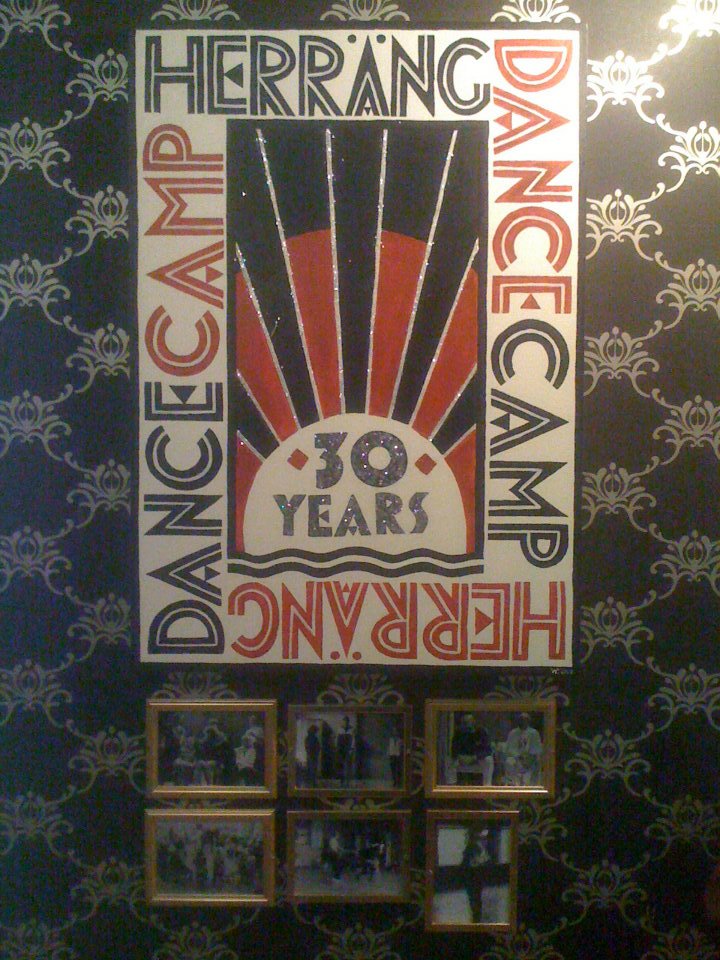
Herräng. If you have been dancing for awhile you probably know what this is, whispered among experienced dancers as the “Mecca of Lindy Hop” or “Swing Dancing heaven”.

Nina Gilkenson even said in Part 1 of her A Word on Swing interview,

“And then my other goal was to go to Herrang, see what that was all about. I heard about it, it sounded like paradise where you got to dance all the time and hang out with a billion swing dancers […] -Nina Gilkenson”

However Herräng for the uninitiated has this air of mystery about it and articles one can read online, stories one can get from friends, and videos of the event on youtube all paint a very different picture of what this event is like.

Average day in Herräng.

With this post I hope to give those who have not been Herräng but are hoping to make the plunge in the future some advice to make their stay easier.

The List

  1. Do Research: Most of the people I know who get frustrated and stressed at Herräng is due to being unprepared for the environment of the camp. A good place to start is Lloyd’s website where he literally has reviews of 10+ years of the event. Another nice little FAQ from Lindyhop Whiteboard Supreme.  Lastly I did a short AMA on reddit’s r/swingdancing subreddit about the camp from a volunteer perspective. Besides that your friends who have gone to the event personally, youtube videos, and Herräng on facebook are also  great resources.
  2. Bring Extra Money: One of my biggest complaints about Herräng is once you get to the camp there is literally no way to get additional Swedish currency, unless if you can somehow get transportation to the nearby town Hallstavik. (There were rumors one could get cash back from the local general store the Kuggen, however when I attempted to get cash back they told me only Swedish cards were accepted.) My advice? Use the Herräng prices page to figure out how much money you need, then bring an additional 1000 SEK minimum.
  3. Make Arrangements Based On Your Personality: Personally I loved the spartan-like housing of General Accommodations, however I am also a fairly big extrovert and love being around a lot of people. To individuals who need time away from people or are light sleepers, the same arrangements could easily become hell on earth. Likewise the earlier weeks have a different feel then the latter weeks a.k.a. the latter is way more crowded, if possible you might want to book your trip accordingly. The important thing is to find out what makes you comfortable as a person and tailor your Herräng experience to suit that.
  4. Learn Floorcraft (If you don’t know it already) : You have two options; first you can go to sleep after the meeting at 10 PM and wake up at 2-3 AM when there starts to become floorspace available on the dance floors or you can dance in really tight quarters. I am talking about people-who-will run-into-you-while-you-are-dancing-Balboa lack of room.
  5. Be Aware of the 2 Dance Tradition: A good portion of the world outside of North America it is standard practice to have two dances in a row. Whether you choose to follow this tradition or not is your own prerogative, but it is a good thing to be aware of.
  6. Friday Night Parties & Tuesday Slow Drag Night, Bring Appropriate Clothes: For Slow Drag night, people tend to be dressed to the nines. While you don’t have to all out, dress at minimum semi-formal to not stick out like a sore thumb. Likewise for the Friday night party (themes can be found on the website beforehand) bring some kind of costume along or at minimum hit up the prop-shop the Wednesday before the the party you are attending, any time afterwards the place will probably be cleaned out of useful items.
  7. Sleep Is A Resource To Be Carefully Managed: With classes, late night dancing, possibly volunteering, and random adventures it is easy to start losing sleep. It is possible to rough it out for awhile completely sleep deprived, but remember there are costs to that. Less sleep means it is more likely that one can come down with the Herräng flu that goes around every year. In addition I have had two friends this past Herräng who missed things that were important to them simply because they decided to take naps and their body was too exhausted to wake up to alarms.
  8. Daily Meetings, Get There Early or Slightly Beforehand: Nearly every article I have read about Herräng has listed go to the daily meetings. This piece of advice is from myself who was a tech crew volunteer and helped to run about 6 of them, if you want to get into the actual meeting prepare to wait in line/queue up for a minimum of 30 minutes beforehand. Otherwise get there 10 minutes beforehand and grab a spot in the Library, Bar Bedlam, or the Dansbanan where the meeting is projected onto screens.
  9. Take Care Of Your Body: This goes hand in hand with number 7, but realize at minimum you will be dancing for a week straight. This is a large amount of dancing is on top of possibly classes and volunteering. I recommend stretching, yoga, napping, taking it easy on dancing one night, anti-cold vodka at the Ice Cream Parlor, taking it easy at the Blue-Light,  and whatever you need to prevent your body from breaking and falling prey to the dreaded Herräng flu.
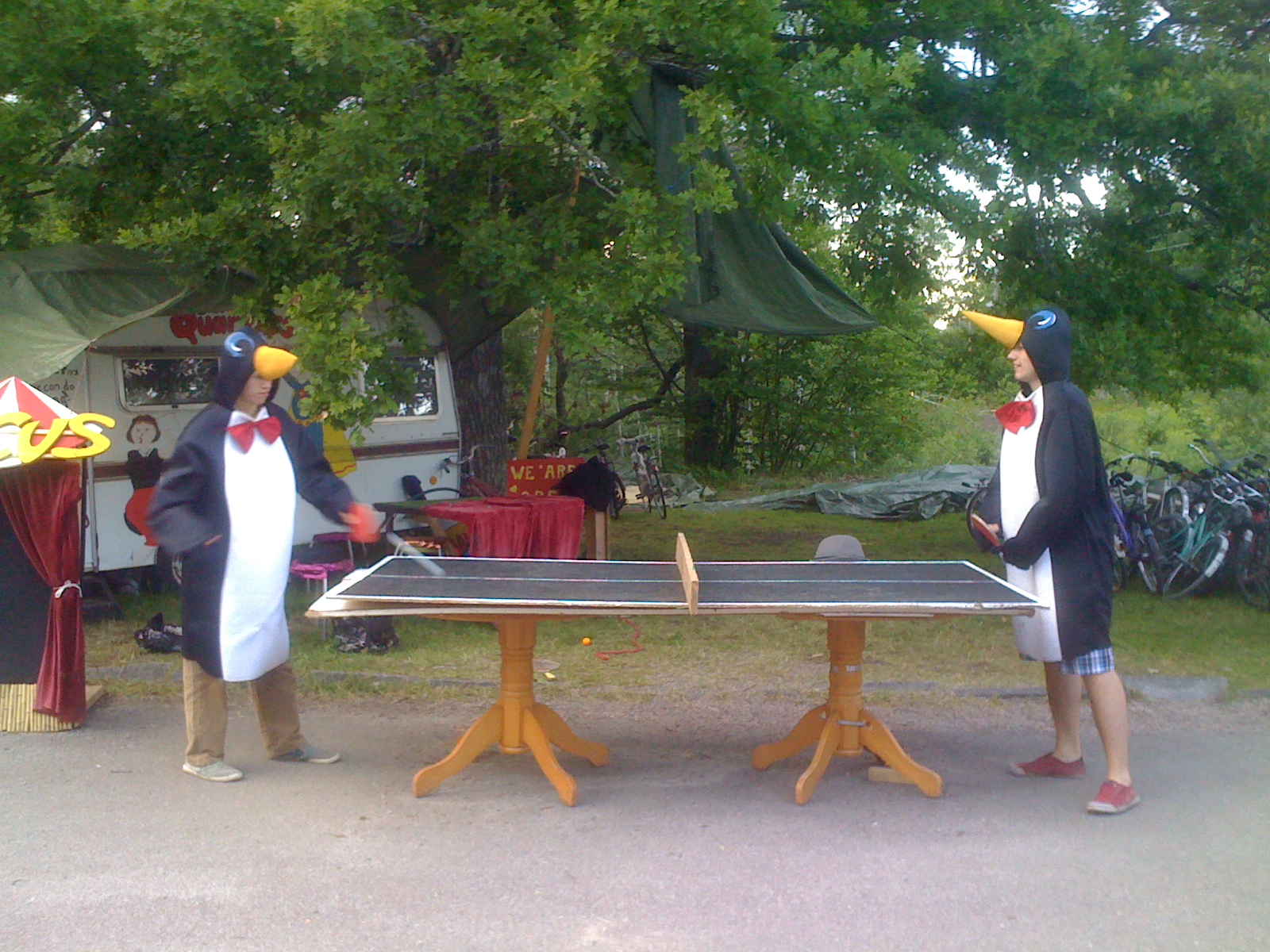
  10. Go On Adventures: Last but not least, get involved! There is Mission Impossible, Friday Night Party decorating crew, Circus, and the list could go on… and on. Herräng’s environment heavily encourages participation by all attendees, part of the experience is getting dragged into a random project or starting your own.

If you have been to Herräng beforehand and have some advice you felt has been left out or if you haven’t been before and have some questions, I encourage you to post in the comment section!

Note: This post has been updated in July 2019 to fix broken links.

Necessity as a Teacher

Floorcraft, a word that teachers often drop in their intro level lessons and dancers all around the world wish many dancers practiced.

“World of Floorcraft, a mandatory remedial course for those who run into other dancers more then twice in one night due to their own carelessness.”

As a teacher you can explain to leads the “look before you leap” analogy, explain to follows how if they see an incoming collision back-lead the lead to stop, and explain to everybody the social ramifications of being the one lead that throws their follow everywhere/the one follow that throws herself everywhere. Once you are past that, you can make slight suggestions but it is usually up to each person to figure out for themselves how to be polite social dancers and not run themselves or their partners into objects/other people.

The interesting thing I have noticed though is in scenes where dance space is a premium such as New Orleans; floorcraft is much higher on average (among dancers, not muggles non dancing people).

In a post titled “Back in New Orleans” written by Peter Loggins in his blog the Jassdancer he writes about the excitement or peril (depending upon your perspective) of dancing in an average venue on Frenchman St. in NOLA.

“however, the Spotted Cat or DBA , now those are places to learn! Cramped, all tempo’s, mixed rhythms, obnoxious people in the way…yeah! Now we talking!” – Peter Loggins

While I recommend you give the entire post a read, this quote really drills home the point of floorcraft being a necessity this particular scene,

“If you want to learn how to be an exhibition dancer, that’s good for you, but don’t be surprised when a big Jarhead beats the shit out you after you accidentaly kick him. It might be fine to kick each other at dances, studio’s and festivals but in the real world all bets are off….” – Peter Loggins

At an average dance if you have bad floorcraft someone the worst that usually ever happens is someone bad mouths you that night and most people forget it quickly, unless if you make it a habit. On Frenchmen Street the potential costs of bad floorcraft can range from; accidentally kicking a drunk tourist, hitting the trombonist’s slide and likely injuring him, to knocking over the tip jar of a band. These can earn one the penalties of getting the shit beat out of them to being thrown out and/or banned from a venue. A tad more dangerous then the average Lindy Hop event.

What To Do?

At least for myself it seems an obvious conclusion that when there are more costs at hand for making a poor decision, it is something people will be more aware of and spend additional time developing the skills to avoid those penalties.  However to cultivate a good swing dance scene, threatening ones’ students with violence for bad floorcraft is probably not the best idea for retention rates.

As an organizer I attempted to deal with the problem of poor floorcraft mainly when it mattered the most; before our dances with live bands and workshop weekends where we would have large attendance. I would do this by in my own lessons choosing moves that required good floorcraft to pull them off or teaching moves that required minimal room and worked great with little room to dance. I’d also put a notice in announcements that good floorcraft was a good way to be polite to our out-of-town guests.

If your local scene has any particular ways they teach or deal with floorcraft, feel free to post it here!

Dance Education Through Social Feedback Experiment

This past Feburary I had a crazy idea.

Many swing dancers go through this period of desperately wanting to improve, in result many suggestions get thrown their way. One of the more painful suggestions is to videotape and review ones own dancing. At least for myself, even in competitions I have won, watching video of myself is one of the most grating things to do because I am the ultimate “negative nancy” and only see my flaws.

Regardless of the mental anguish watching my own dancing on film caused, I considered it a necessary evil to improving my own dancing abilities. In result, I started filming myself dancing;  afterwards I would review those notes and use it as a tool to decide what in my dancing I needed to practice my focus time on. However I realized some serious drawbacks; I was limited to my own experience of judging visually the quality of a dance and I was limited in my ability to provide suggestions to correct/improve upon problems discovered.

Based on those perceived problems my next idea was to add more people to the process. What resulted was using crowdsourcing to obtain constructive feedback for my dancing. An assortment of opinions from varied members of the swing dance community was more likely to yield effective material to work on then just myself. Just like many other questions I have had related for the swing dance community, I took it to the swing dance messageboard/website Yehoodi in a topic labeled, “Dance Education Through Social Feedback Experiment

Yehoodi is a community of folks from around the world that are passionate about lindy hop, swing dancing and swing jazz.

The Experiment

Framework for the experiment was simple. I would post a video of myself social dancing with a partner; after the video was posted I would open the floor for commentary/suggestions to be posted about that week’s dancing. After the allotted time had passed, I would post goals based on what people had posted and then after a period of time post another video of myself social dancing to show the progress I had made. After that the cycle would begin anew.

Unfortunately due to some circumstances I only got to run the experiment for four weeks. However, I think I had amazing results in the small amount of time it ran for. After the experiment I felt much more confident in my dancing and managed to make finals and be in the top five of the intermediate J&J at Boston Tea Party.

While I did gain a lot from this experiment, there were some difficulties.

  • The first was being able to determine which suggestions/constructive criticism had a solid basis. The beauty and difficulty of dealing with Yehoodi is anyone can post on there. This means the individuals offering me this advice could be anyone from an international instructor to joe-schmo who only dances East Coast Swing to rockabilly music. My method of dealing with was keeping an open mind and using what I knew about each poster to determine how trustworthy of a source they were.
  • Second was simply recording myself at a social dance on a near weekly basis. Having another person available to dance with at a certain day every week, remembering the camera, getting someone to give up social dance time to film, and said camera having batteries that were not dead. Having that all add up perfectly was surprisingly difficult at times.
  • Lastly was getting comfortable with the idea of posting my dancing on an internet forum for people to judge. I consider myself to be quite like a honey badger and I have had videos of myself in competitions posted on youtube in the past. However, the idea of only myself on video that people I knew and strangers were going to pick apart still took a bit to warm up to.

Observations

If a reader of this article was wondering if an experiment like this would be beneficial to them, I think it would produce great returns given that they have a thick skin and they have been dancing a decent amount of time.  If a person doesn’t take criticism well or is very sensitive about their dancing a private lesson or feedback from trusted friends would probably be a more appropriate avenue to take. Newer dancers are likely to lack the context to determine if advice is well founded or completely off the wall.

The one way this experiment could be  improved is by limiting the individuals who give feedback to dancers who are respected “experts” in the field. Which in my opinion is currently being done by Dax & Sarah’s Swing 90x program. From what I have read on the blog posts required for the program and from talking to someone who is in it, they are getting at minimum quadruple results of my little experiment.

Acknowledgements

I’d like to thank:

  • Yehoodi posters; Capt Morgan, Glen, NoNameJive, Toon Town Dave, Brooksie, Hounddog, Zenin, alexcloutier, Random, bryn for providing feedback on the Yehoodi thread.
  • The Yehoodi Talk Show for mentioning the topic and giving some great advice.
  • The follow who wishes to be unnamed that let me dance with her on film.

Youtube Doubler

Awhile back, Patrick Szmidt was kind enough to tell me about YouTube Doubler. While it has many uses for the general public such as seeing if the song of one video would be a great mash-up with another video, I am going to go over some uses the swing dance community can have for it.

YouTube Doubler Uses For Swing Dancers

  1. Comparing Performances at Events: Want to see how your recent performance of a routine compared to a previous one for consistency and improvement reasons? YouTube Doubler will show you if you fixed looking down and other timing related issues.
  2. Learning Routines: Do you have a thing for historical accuracy and want to do the Dean Collins Shim Sham as close to Dean as possible? With YouTube Doubler you can put yourself right next to Dean and compare your Tabby the Cat movements on the spot.
  3. Confirming That Couples Have Pre-Prepared Choreography For A Chorus/four 8’s/et cetera: For personal amusement, want to check if a couple has choreography that they use for a certain timing? With YouTube Doubler you can show how they used the exact same moves at ULHS and ILHC.

While I don’t recommend you go crazy with YouTube Doubler (since trying to sync up sound at times can drive one crazy) it is a great tool for the reasons mentioned above. A recent way I used it was in a class at Stompology this past weekend, Michael Faltesek mentioned that Sharon Davis and himself borrowed a move from the 1943 film Cabin in the Sky.

They did a pretty spot on job.

Creating Life Long Dancers and/or Better Dancers

I was at a Denny’s last night, when a fellow dancer mentioned a point that brought up the idea of dance venues fostering a culture of creating life long dancers (or dancers that will for a long period of time return to that same venue) and that it doesn’t always correlate with creating better dancers.

However a struggle occurs when instructors are stuck in that environment which the creation of better dancers is not a priority. Some instructors (including myself) experience frustration when dealing with a local community that the end goal for most dancers is not dance improvement but other aims.

Business is Business

From a business point of view, creating life long dancers as a priority makes sense. You can read many articles/blog posts about catering to newbies or some older posts of the decline of the NY/California bar venues from the 90s due to people not buying drinks at bars. Dancers on the advanced side of the bell curve tend to invest much less money then a newer dancer. They will tend to skip lessons, bring in their own drinks, and et cetera. I personally know some dancers that will purposely show up to venues late to avoid paying cover.

Dancers on the advanced end of the bell curve are simply not that profitable with current business models. In addition advanced dancers are a small subset of the entire population of swing dancers, why would it be worth the time of a business to restructure their model to make profit from them when they have a large portion of the population (i.e. beginners) that they already make money from?

What This Means For Teachers & Students

As an individual who has taught several “Intro to Swing” classes, I am no stranger to seeing people in these newbie classes that improvement is the farthest thing from their mind and instead meeting others or having something to do that night are their priorities. If one is uncomfortable with that idea, then they are better off running a performance troupe or not teaching to be candid.

If ones’ reason for teaching though is simply recruiting as many new dancers as possible into a scene, then there is no issue with the model of just only trying to create life long dancers. However I would say many instructors (including myself) feel a sense of responsibility to not just do that but in addition provide guidance to allow our students to make tangible progress at becoming better dancers in our classes.

What is frustrating is when one is in an environment that creating better dancers isn’t a priority even close compared to retaining newer dancers.  That results in having “intermediate” or “advanced” classes that people show up to feel like they are in those categories and make little to no tangible progress over several months. As an individual who has taken classes and prepared to “bring it” to improve, frustration sets in when one realizes most people treat it as a hangout session. As a teacher it is frustrating dealing with those classes because often you have to teach to the middle of the bell curve, which is significantly lowered when this attitude is the norm. Personally I hate holding back the students who were ready for the material or actual speed of progression I planned for a course.

Differences Within A Community

Yes, I understand focusing on newer dancers and creating life long dancers is important for scenes. Especially for non-college scenes that operate as a business to stay afloat. The trouble I have is personally accepting the mainstream pedagogy most swing dance scenes have compared to other institutions of learning in my life.

A convenient example is getting a college degree. There is a set list of classes, with many meant to be followed in a progression to make life easier for the student because taking a course such as Calculus III might be difficult if one had a poor grasp of algebra. Taking difficult classes that one does not meet the pre-requisites for possibly comes off as arrogant and likely sets one up for failure.  I’ve said this as a warning to my students before a footwork variations class, “Taking a swingout footwork variations class without a solid swingout is like decorating a cake that tastes like garbage.”

I could list more examples in different communities but I will spare you from me potentially rambling. What I would like to hear is your opinions. Do you think scenes should take more responsibility into ensuring their students have learning opportunities to making tangible results? Anything regarding your local scene or scenes you have visited in respect to this entire post?

Building The Local Community in Spite of Travel

I have a bit of a confession to make. The last six months I have barely danced in what is considered my “local” scene compared to my dancing weekends on the road. I may pop in and teach a lesson, but most of the social dance portion I end up practicing things in front of a mirror or chatting with friends.

Part of it is I fall into the trap of comparing my scene to other scenes, I can even provide a small list of thoughts that sometimes go through my head:

 I wish (my local scene)…

  • is competitive like Southern California.
  • is crazy and fun-loving like Baltimore.
  • encouraged solo dancing (and is conveniently located next to an amazing BBQ restaurant) like Rochester, New York.

What Changed?

Three things I came across online challenged my dance lifestyle and way I viewed things:

1. Michael Seguin’s post on the Mobtown Blog titled, “Competitions, Events, The Cult of the Amateur, and a Coda on the Slow Dance Smackdown“.

The quote that relates the most of the topic at hand is,

The best and most committed dancers in a particular scene sometimes aspire to national rather than local glory. Instead of building their own community, recruiting students, and making the sexiest dance scene possible, they join the ranks of the regular event-hoppers. There is nothing wrong with this in principle, but the trend isn’t sustainable. Events feed off of the legions of dancers who cut their teeth in small scenes and are looking for a special experience. If no one is developing and maintaining local and regional dancing, events have no pool of dancers from which to draw. – Michael Seguin

2. Hamfats.ca video interview titled “Words for Lindy Hoppers” featuring Kelly Porter

3. Jamin Jackson’s blog post titled “Scene Drama: “Un”Divide and Conquer” which goes over improving the relationships between local scene leadership and traveling dancers.

Common Theme

While there were small similarities in each of the three things brought up, the one unifying theme is while traveling is important it is also equally if not more important to foster growth in ones’ local scene.

Personally I have resolved to try to help out my local scene/area and foster growth. However it isn’t as easy as pie, there are definitely days where I get bogged down by what Jamin refers to as “event blues”. But have gotten better at handling it by having the rationalization that carrying the attitude of comparing my weekly dances to what happened the previous weekend is a determent to my local scene and myself because it creates a negative atmosphere for individuals who interact with me and for myself.

One thing that has helped carry out this “fostering local community growth” attitude is like with my personal development with dancing I set concrete goals for myself. It can be a little thing such as having a goal of giving one sincere compliment to someone I have not danced with before to as big as agreeing to help judge a local competition or set up for a dance.

I invite you to share any thoughts or comments you have about this topic. I have had friends from all over the United States talk about it, but it is always in online or private conversations that are out of the eyes of their respective local organizers.

Otherwise I leave you with this insightful quote from Jamin,

Recognize that many people you do not know played a critical part in leading you throughout all the various scenarios and odds into the swing dance community.  If there is ever a point where you are angry at someone in your scene, know that the feeling of anger is not necessarily bad.  In fact it is an opportunity if mixed with love to create powerful solutions that can benefit your scene.  However, when you do something bad with that feeling, it hurts everyone.  Instead of taking a brick and throwing it through a window, use it to build something that will last. – Jamin Jackson

Motivations to Lindy Hop

Recently there have been some notable posts that cover the main motivations why people swing dance.

Reasons For Moi: The Spark and Challenge

For myself I have a primary reason why I dance and a secondary reason that helps to allow the primary to happen.  I think a lot of individuals are in the same boat of myself that while there may be a primary reason, there are a variety of secondary reasons as well. An example of this is why I like dancing in Montreal. My primary reason is because they have a great dance scene that is fun to visit. However my secondary reasons are because I like the opportunity to practice my French and they have delicious food.

“The Spark” is my nickname for those moments in dance that just blow your mind and are indescribable. At the risk of coming off completely insane, it is this feeling that you can’t tell who or what is in control but one is almost possessed and have this feeling of invulnerability that causes you to just own whatever you are doing or click with another person on this almost ethereal level. When Greek mythology spoke of the concept of a genius, this is the closest I can think of what they were talking about.  “Owning it”, “Killin it”, “Being on Fire”, and the other names for what people refer to this as… this is the primary reason why I dance. Those moments are rare, but I am constantly seeking them out.

Blatantly stolen from wikipedia: "Winged genius facing a woman with a tambourine and mirror, from southern Italy, about 320 BC."

Challenge is my secondary reason because they make the possibility of “The Spark” happening. Having clean basics allows me have a clear line of communication with the lead or follow I am dancing with. Constantly tackling new material or refining what I have allows me to have more tools in my toolbox to match whatever the music and my partner is giving me in a dance. I have days when I don’t feel like practicing my triple steps and would rather instead watch television or eat ice cream, but my primary motivation to dance works to feed my secondary one.

Tapestry

I’m glad that discussion is arising from these blog posts about the motivations behind why people Lindy Hop. The comment sections of these posts are also filled with opinions that provide insight behind reasons why people travel miles to dance with strangers or even just go out to their local venue every week. The most relevant comment to myself was one Cari posted herself in her move(me)nt post,

Actually, if you’re going to say that Community is not very hidden, I don’t think you can say that the Challenge is very hidden either: while I was writing this post, I was discussing it with a friend; she disagreed with me in that she started dancing because of the challenge it posed, and only found the Community later. Now, I would say she probably loves both aspects of the dance – but the Challenge was still one of her first motivating factors. – Cari from move(me)ent

I first joined Lindy Hop because at a house party I saw people swinging out and I wanted to learn that. As a natural extrovert,  meeting people and making new friends has never been that difficult of a thing for me. I started traveling because I realized to get better I had to visit areas with opportunity to learn from experts. Only after awhile in the travel circuit did I make bonds with some folks and community became an influence in why I danced. I have always felt odd that I didn’t start because of a friendly gesture or a pretty girl like many other leads.

If I have learned anything from all these posts it is two things.

  1. Why individuals dance Lindy Hop is not a simple thing that can be defined by one reason, it is a tapestry that encompasses multiple motivations which vary from person to person.
  2. No person is an island. While many of us have different motivations, you can almost certainly find someone with similar ones to your own.


Keeping in Contract

Expectations
Contracts, an essential article that organizers and instructors have to deal with alike before a swing dance event. In the ideal world all expectations are explicitly stated and agreed to in these documents before an event. However as shown in Bobby White’s article Implied in the Contract over at Swungover this is proven to frequently not be the case. Usually though this only results in possible annoyance of the instructors and/or organizers.

However in the worst case scenarios this can end up being disastrous and costing individuals thousands of dollars.  This doesn’t even go into the opportunity costs for instructors or organizers. Instructors who lose money on an event could have been at another event which would have paid them or perhaps at a competition that they could have placed and received prizes and possible credibility to earn future teaching jobs.

Below are two links for situations that are arguably worst case scenarios, I won’t go into detail about them here but let you make your own judgments.

Advice for Organizers

  1. My first piece of advice is if you haven’t read Bobby’s article on Swungover, do so.
  2. Second piece of advice is from a video titled, “F$#% you Pay Me”.

At the 8:45 minute mark is great advice is given for anyone dealing with any type of contract.

Clear definitions.
Clear expectations.

… all explicitly stated and agreed to by both parties in A CONTRACT.

Summary: Only expect instructors to do what is stated in the contracts. Showing up for dances, doing demos at the Friday night dance, judging contests, et cetera should all be agreed upon in that beforehand. Otherwise, don’t expect it.

Advice for Instructors/Performers

If you want something, put it in your conditions to work in the contract. Even if it is small details such as being provided water during classes or having the option of getting transportation to leave a dance early. As an organizer myself I want the instructors I hire to be as comfortable and happy as possible, because often they carry that attitude to the classes they teach. I know most good organizers hold this same view as well. If what to do to make that happen is conveniently provided in a list form it makes life easier on myself and the volunteers for my event. In addition it makes life for the instructors easier during that event.

For those of you who teach outside of your local area Richard Halpern’s advice in the comment section of one of the ifsgscrewedus.com posts is spot on,

Yes indeed, folks! You all should have been wise enough to get ALL your travel arrangements either made and paid for by the client, OR to have been completely reimbursed BEFORE you left, as well as receiving your TOTAL PAYMENT IN-FULL, at least 30 days PRIOR to the date of the engagement, if being paid by check, or 7 days prior, if being paid by wire-transfer (as is customary when dealing with gigs that are out of the USA.

[…] I do these kinds of gigs all the time, all year long, and because of my requirements, I don’t have these problems anymore. Some of the bottom-feeding “agents” in the lookalike and event planning industry have complained that I am being a “Diva” or am “Ego-maniacal” because I ask for these things, and they are the ones who always leave themselves open for this type of abuse from disreputable clients, and then expect the talent that they themselves contracted with, stand by them when they don’t get paid. What a crock. Good luck to all of you on this one.

Unnecessary Risks… Don’t Take Them

Contracts exist to protect both parties and remove any ambiguity from a business relationship.  In addition they ideally provide a plan of action if things go awry (instructor’s flight gets delayed/organizer has to cancel event after contracts are signed/et cetera).  In respect to contracts I want to to leave everybody with these finishing remarks:

  1. Know what is necessary criteria for yourself as an organizer and/or instructor for contracts and do not back down on them.
  2. If someone tries to get you to avoid contracts with promises of trust or great rewards, walk the hell away.
  3. If possible/reasonable get a lawyer to draft an initial contract, they are professionals and anticipate things one would not even fathom.

Addendum

In the comment section below there have been some responses posted in relation to the situation in which the organizers are more then willing to pay/hire instructors, but getting contracting to happen is difficult due to the behalf of the instructors. A quote from Michael Gamble from Bobby’s Swungover post I think addresses these situations best,

“On another side (not necessarily “the” other side), I’d like to point out that not all instructors are comfortable, eager, or even ABLE to interact on this professional of a level. There are definitely some who prefer a less formal agreement, who chafe at spelling out their needs, and who, let’s face it, do not like to write emails. (That was not a euphemism for “they aren’t very timely in their responses” — some actually don’t like it and can get surly and/or increase their demands if pressured to respond to a request) This is perhaps doubly true of many musicians.
So with those things in mind, I often find myself trying to figure out “at what level” each staff member operates, and try to meet them there, for practical reasons.”

My advice for future organizers, especially college students is unless if you are dead set on a certain instructor/pair of instructors talk to experienced organizers before you attempt to hire anybody. Ask them in their experience which ones have been professional and easy to work with. Organizing a workshop is hard enough, the larger number of things you can limit as stress factors, the better.

The Life of an Amibdancetrous Dancer

am·bi·dance·trous

adjective

1. Having the ability in dancing to perform both roles of lead and follow competently.

Earlier this week I made a post in my new tumblr account about my experiences as competing in both roles as a lead and follow at the Boston Tea Party this past weekend. It got a decent amount of feedback so I figured I would expand a bit on the topic.

So You Are a Lead, Why Follow?

About a year after I started dancing I was told that they wanted me to teach at my college scene after the summer. To prepare for it back home in California I took introduction to Lindy Hop classes as a follow for twofold reasons; first to learn how to teach swing dance lessons and second to understand the role of a follow. The second reason mainly came from annoyance of having lead instructors responding with “I don’t know, you just follow” to class questions from follows.

I have a few reasons these days why I follow. One of them is because it is a different experience, that presents a unique set of challenges that I don’t find in leading. As a follow how do I insert my own styling and personality within the framework that my lead provides for myself? My lead gives me some free time to improvise, what do I do with this time? The questions could go on. Another big reason is it helps me immensely in learning how to be a considerate lead. When you follow a decent amount you learn what pisses follows off. Ideally what follows is not fricken doing those things. This translates to my teaching because I can break down to newbie dancers from personal experience how not to piss off people on the social dance floor.

Isn’t It Awkward?

Yep, there have been some awkward moments taking classes as a male follow. Mainly only in intro to Lindy Hop classes, I have gotten odd looks and male leads looking fairly uncomfortable having me in closed position. Largely though I have gotten nothing but positive encouragement and support. While I usually have to do the asking from leads if I want to follow, I was pleasantly surprised that at Boston Tea Party I was asked to dance as a follow a few times. One thing I always give kudos to the Oberlin, Ohio swing dance scene is the fact that I frequently get to asked to dance as a follow there and I associate them with being a role-model for an open and accepting community.

Competition?

Speaking candidly my biggest apprehension about competing as a male follow is people interpreting me as mocking that dancing role. While it presents a different set of challenges, I consider it an equally difficult role as leading and the last thing I would want is people interpreting my dancing as looking down upon it. I’ve always wondered if I get somewhat of an unfair advantage of being a male follow because I tend to stick out more in the prelims in a J&J for obvious reasons. In addition I have wondered how judges deal with that situation.

Last but not Least

To quote my tumblr post, my personal opinion on the whole matter is frankly I don’t give a damn what gender what my follows or leads are, just if they can dance. However I would be happy to hear your experiences or opinions on the matter, feel free to shoot me an email or post in the comment box below.